



While the president of Ceuta, Juan Jesús Vivas (PP), assured on Spanish Television that there are still 6,000 immigrants “wandering” around the city and “without having their needs met,” the Civil Guard was trying to reduce that number on the beach next to the Tarajal border.
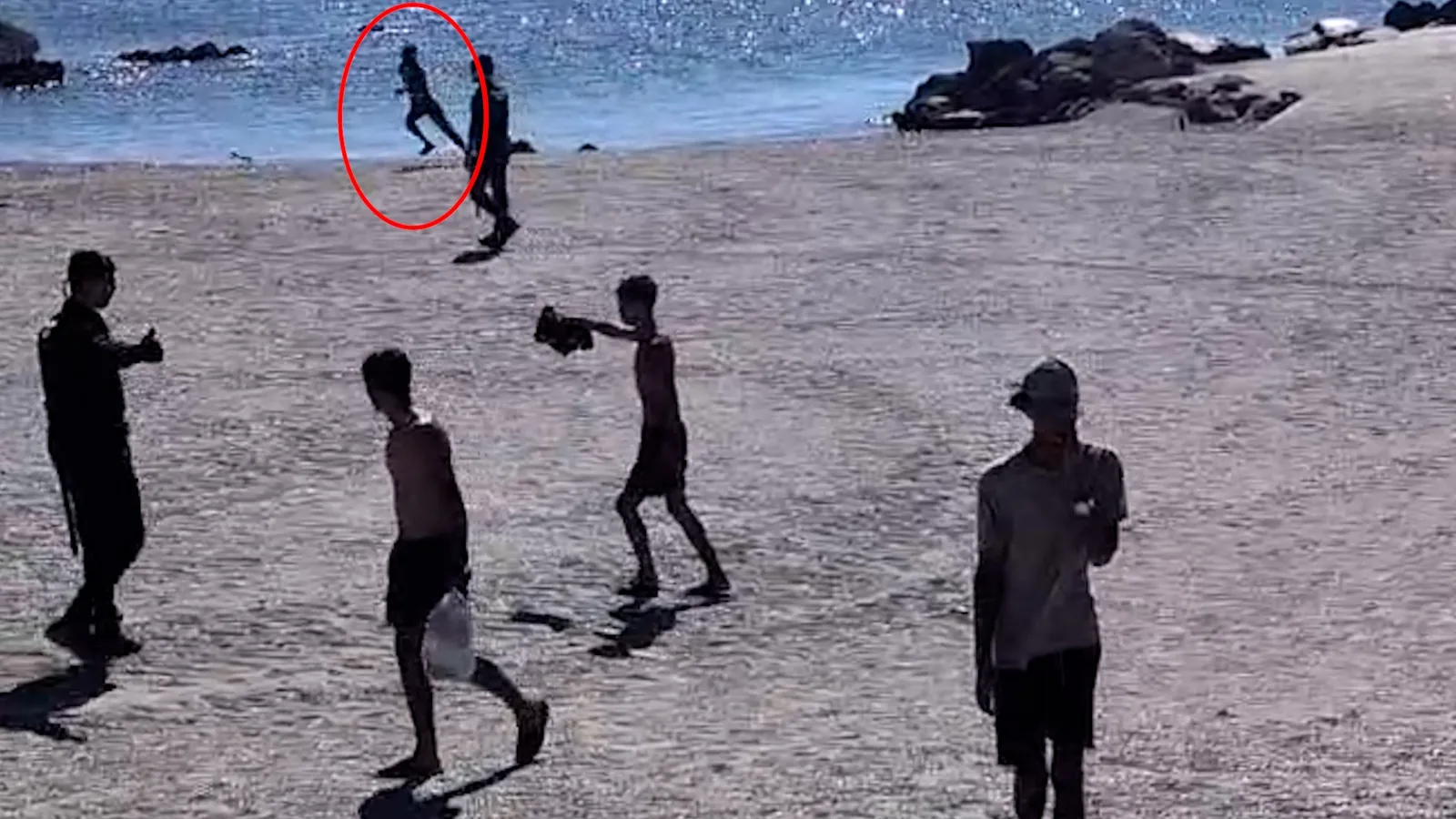
It was 11:15 when several agents appeared driving a group of young North Africans by the sea. They were herded towards Morocco, surrounded by the officers and with hardly any room to stray from the marked path. Upon reaching the vicinity of the Puerta de Europa beach bar, the last Spanish bar before the border, the boys understood that they were going to be returned.
“No, no,” they pleaded. They were on the beach, just meters from Morocco, with the Civil Guards blocking their way on the sides. However, one by one they found a gap between the agents and started running in the opposite direction. All managed to escape except one.
The young man remained still and obeyed the officers’ orders. He begged not to be taken to the border, but received several shouts of “yallah, yallah” —“come on, come on”, in Arabic— as a response. Finally, resigned and escorted by two Civil Guards, he walked the last meters of the beach to the Tarajal border crossing.
This is an unprecedented procedure in recent days that EL MUNDO has witnessed firsthand. Until now, especially during Monday, it was Legion personnel who were responsible for locating immigrants, gathering them at different points on the beaches, and transporting them by military trucks to the border.
The Army then assured that the people boarding those vehicles were “volunteers.” However, some begged not to be returned, cried, or tried to escape when they realized that the truck’s destination was Morocco. Scenes of young North Africans and sub-Saharans running away and legionnaires chasing them to drive them back to the groups were repeated throughout the day.
The strategy seems to have changed. After a Tuesday in which only about a hundred minors were seen being sent to Morocco, escorted by National Police officers and SAMU Foundation workers, this Wednesday it was the Civil Guard who led young Moroccan men on foot to the border, in small groups and without the military trucks used during the first days.
The scene took place while the administrations continued to disagree on how many people still remain in Ceuta. Vivas estimated about 6,000 still “wandering” around the autonomous city, compared to the between 2,000 and 3,000 estimated by the central government.
A “overwhelmed” city
The president of Ceuta assured that the city remains “on edge” after the massive entry of immigrants last week. Although he acknowledged that the tension has eased after the return of much of the newcomers, he insisted that Ceuta continues to be “overwhelmed.”
According to the calculations presented by Vivas, around 80,000 people entered the autonomous city during the influx, 8,000 more than counted by the Ministry of the Interior. The president maintains that about 73,000 have already returned to Morocco, while the central government places the entries at 72,000 and states that approximately 70,000 have returned.
The president of the autonomous city again criticized the Executive for a response he described as “late and insufficient” and warned that there is still a “high risk to public order and citizen security.” He also criticized that, several days after the massive entry, the authorities still do not know exactly how many immigrants remain on the streets of Ceuta.
“How is it possible that we still do not have the exact number of those who remain in Ceuta? How is it possible that not all have been identified? How is it possible that expulsion proceedings have not yet been initiated?” he asked during his television appearance.