





Estrella Caballero did not want to leave Ceuta. At 81 years old, her intention was to stay in her home. She was aware of the avalanche of 80,000 immigrants who crossed the border with Morocco on July 30, practically the entire population registered in the autonomous city. But she would not be moved from her roof. «I don’t want to leave my home», she kept telling her son Anselmo Cruces, a graphic and industrial designer who, for her safety, wanted her to spend a few days at the house he has in Algeciras with her tita.
Finally, Estrella changed her mind when she went back out on the street on August 5, the day the procession in honor of Santa María de África, «Mother and Patron of the City» since 1418, is celebrated. «The impression was enormous. She suddenly felt the harsh reality, the human drama,» her son explains. Estrella saw children the age of her grandchildren wandering alone, asking for a phone to contact their family, or sleeping in the alleys. The elderly woman broke down crying. She kept repeating the same thing to her son: “Where can I buy them food?“». But the nearby supermarkets were closed or out of stock.
«When we returned home we talked. It wasn’t that we wanted to kick her out of her house, but that we would all be much calmer if she were away for a few days while the situation clears up. My concern is that if any health problem arises and we have to leave quickly, she is in a safe place and can receive all the care she needs. So in the end, she agreed to go to the house in Algeciras,» Anselmo recalls.
They took the ferry on Friday, August 8 at 5:30 p.m. The boat was full of «grandparents, children, and families». «These are not people who wanted to leave Ceuta. They are people who, faced with uncertainty, are trying to protect their own,» reflects the designer.
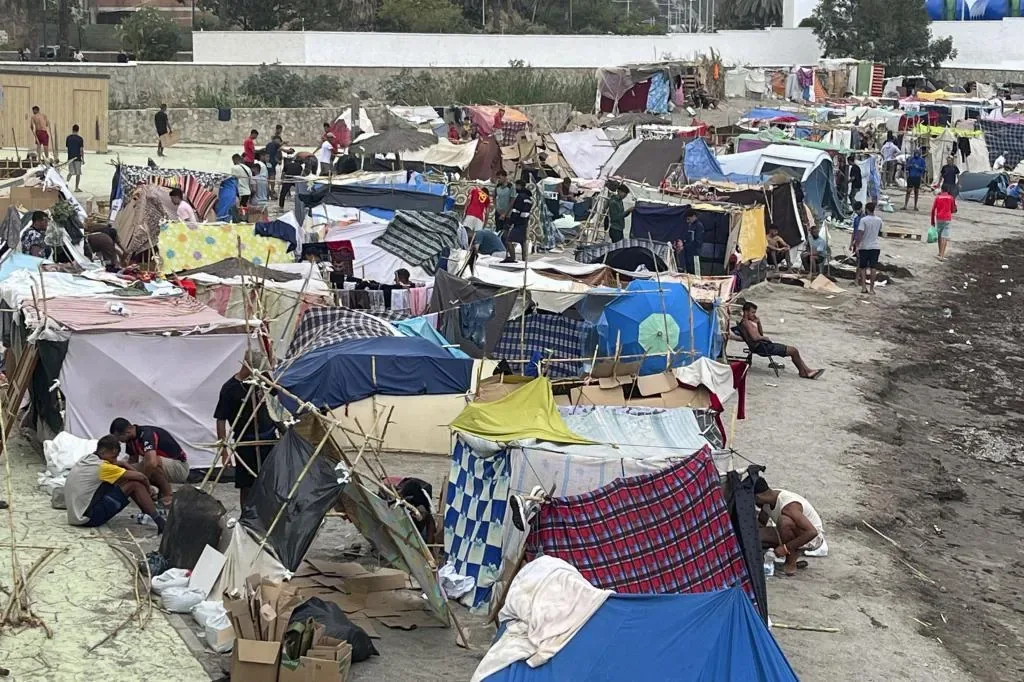
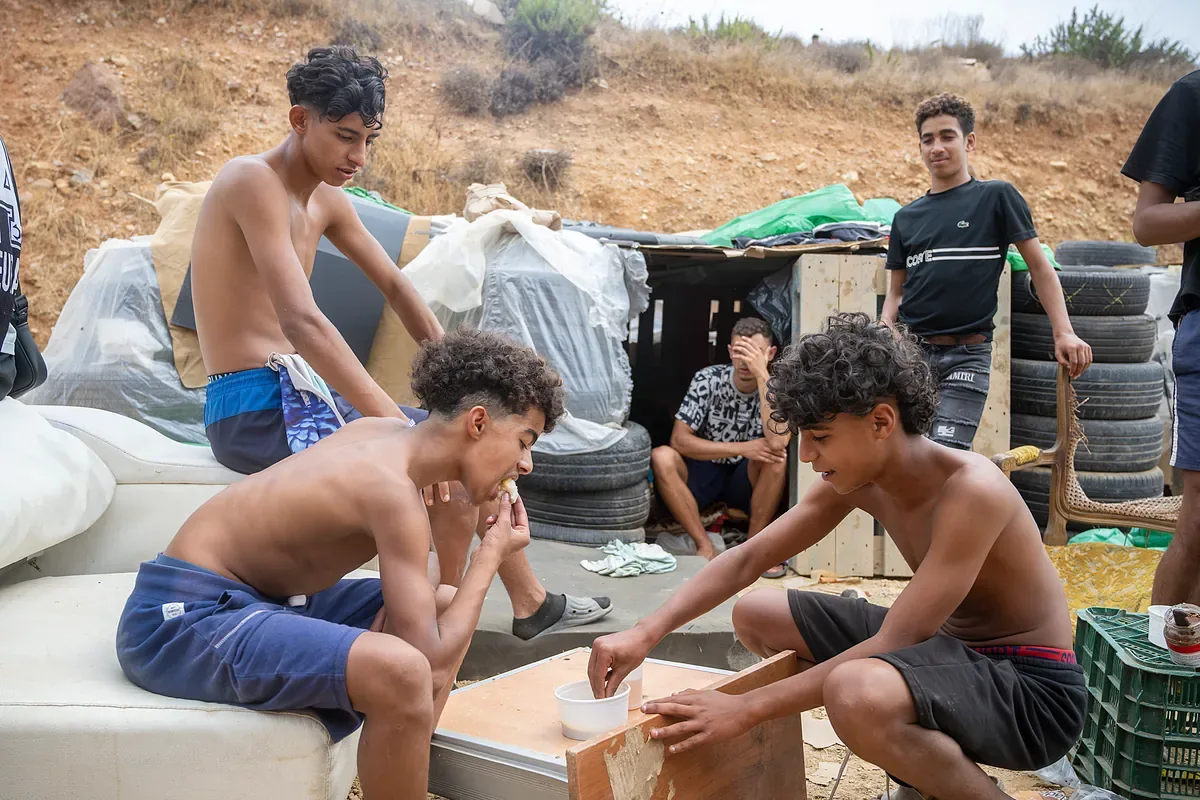
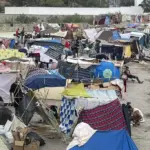
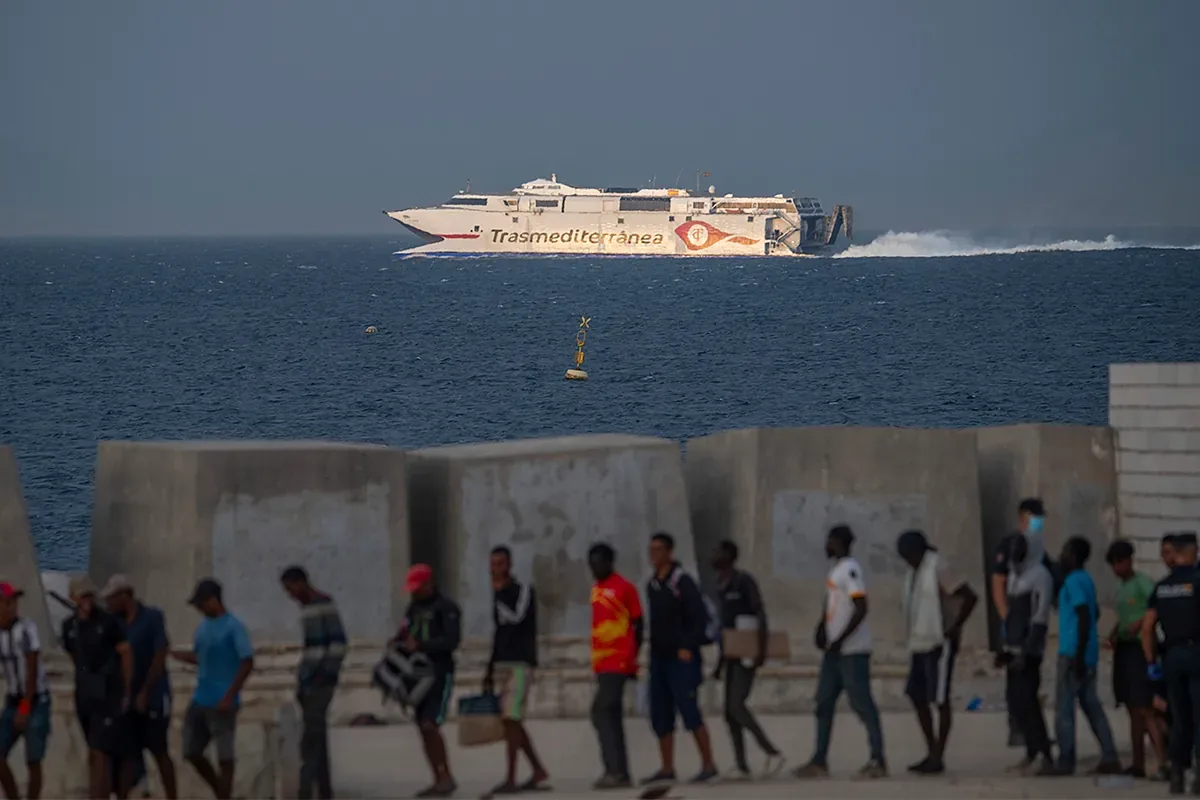
In the streets, parks, beaches, and slopes of Ceuta, thousands of people continue to sleep almost a month after the massive entry on July 31. Conversely, dozens of Ceutans temporarily leave their homes. And if work does not allow it, they send their children away until the situation normalizes. Some parents even demand that educational centers start organizing telematic classes as during the pandemic. For Ceutans who have a second residence, family, or friends outside the city, leaving temporarily has become the only alternative for minors and the elderly to «live peacefully».
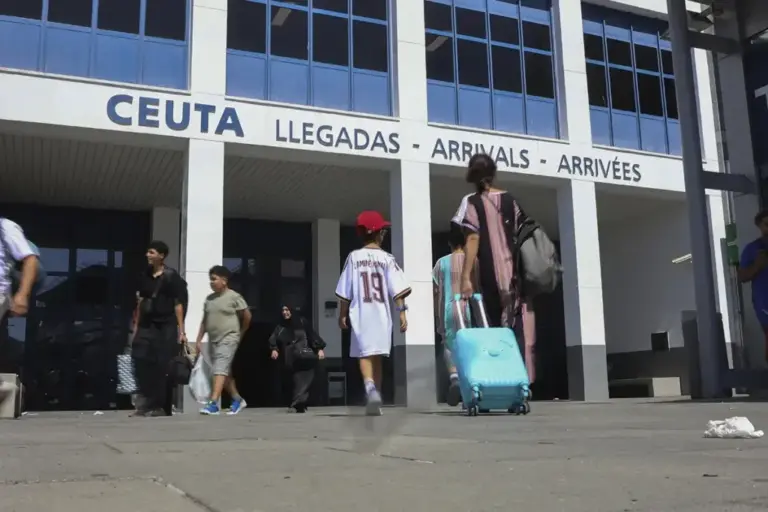
«We have our daily freedom curtailed. With my nine-year-old son, I have only been able to go to a friend’s house. And that’s how it will be for the rest of the summer. And I fear the fall and winter. Because we will continue the same,» speculates a Ceutan lawyer who prefers not to give her name. «When it rains, they will take away the sports center to put those who remain because they will be getting wet and it’s cold, and we will be left without karate for the children, nor yoga, nor horseback riding. And if there is, they will be under the watch of delinquents, because many have records. That is the reality, but it is not said,» she denounces.
«Ceuta right now is a lawless city. And those of us who have grown up in it have always had a feeling of uncertainty that maybe from outside is hard to understand… There has been for generations that fear that one day something will happen and our city will be overwhelmed. The Green March of 1975 is still very present in the collective memory of Ceutans,» explains Estrella’s son, head of a third-generation family business in aluminum and glass carpentry with 15 employees, several of them of Moroccan origin.
Fears from the past
«You don’t know if the immigrants who stayed are friendly or if there will be an uprising. Because right now the situation is what it is, but, as happened a few years ago, when there was an uprising of 240 sub-Saharans,» Anselmo recalls. He refers to the riots in El Ángulo on October 11, 1995, considered «a before and after» in the history of Ceuta as the southern border of Europe.
That day, the sub-Saharan migrants were blocked at the Royal Walls. The exit of the Kurdish group, authorized by the Ministry of the Interior and carried out by the National Police, was the spark that ignited the first protests of Africans who felt discriminated against. Many were from Rwanda who had just fled the genocide and began throwing stones towards San Juan de Dios Avenue. They also burned cardboard and cloths to demand a solution to their asylum requests or to be free to go to the Peninsula.
The smoke, driven by the east wind, reached the neighborhoods of Hadú and El Morro, and the situation quickly got out of control. There were clashes with the population and law enforcement that resulted in 200 arrests, two immigrants seriously injured, and a National Police officer, Antonio Arrebola Alcántara, shot. The shot came from a house near the Walls, but the perpetrator was never discovered. «Now it’s not 250 immigrants. It is estimated that 8,000 or 9,000 remain in the city, we don’t know. The last thing I read was that there were 10,000. I also have a friend who distributed food for 5,000 people in one day. If with 250 people Troy burned, imagine what could happen if this heats up,» says Anselmo.
Gaditan exile
In Cádiz, Antonio – a fictitious name – touches the ceitil hanging from his neck. It is the traditional currency of the autonomous city that is replicated for bracelets and pendants as a symbol of identity. Minted during the reign of Alfonso V of Portugal, The African (1438-1481), on the reverse of the copper coin appears a castle with three towers over three waves. The coin remained in circulation for decades, even when the city became part of the Crown of Castile in the 17th century.
«The children I cared for in Ceuta gave it to me,» he recalls. He does not give his real name for work reasons. He is a healthcare worker and the situation is «heated» for his profession. «They are overwhelmed,» he points out. The tension experienced this week between the city’s president, Juan Jesús Vivas (PP), and Mónica García, Minister of Health (Sumar), does not help. García stated that «migrants do not bring diseases» and that they can contract them now «due to the unsanitary conditions» in which those not returned to Morocco live. Vivas reproached her for going to «give lessons in humanity and solidarity» to Ceuta.
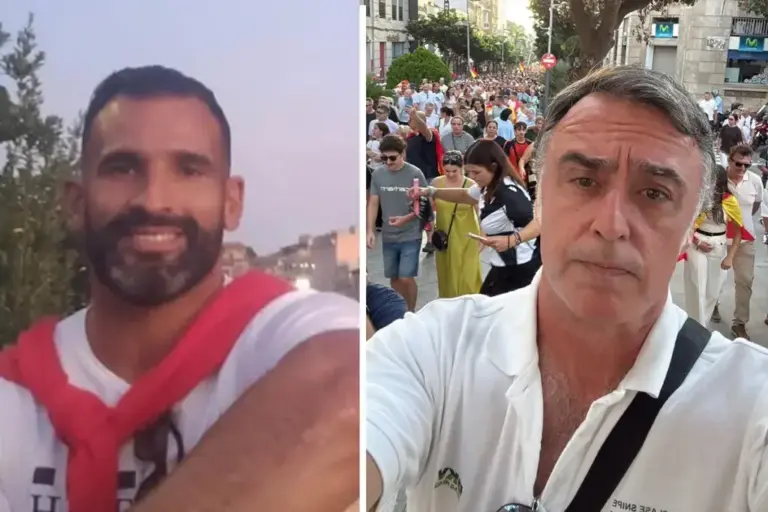
«As a colleague, she should have come first. Because with our deontological code, our hands fall off for helping everyone,» Antonio emphasizes. He arrived in Ceuta «as a kid» and stayed to study Clinical and Biomedical Laboratory Technician at IES Almina. «I fell in love with its people, with how you could live so well among so many cultures. I made friends, brothers, of all colors, races, and religions that I couldn’t care less about,» he highlights.
Antonio considers himself caballa, as Ceutans are colloquially known, because he lived «the best time» of his life there. «I always went around without fear and without problems. I went everywhere: to do internships at Príncipe with my friend Piedad, to Los Rosales to study with Penélope… We had permeable borders. Ladies came to sell us things from their garden and we went happily. Those who have not lived in Ceuta do not know that going to Castillejos to buy fish was something else».
But the time has come when he could no longer take it. «I left Ceuta crying because it seemed like a magnificent place to have continued my life. But I felt that no one cared about anything there anymore. What is happening now is inconceivable. It’s disgusting that no one helps you. The psychological damage this will leave is unknown because it is a lot of stress. And if something bad happens to my people, I will burn the Rif,» he warns.
«Many Ceutans live a situation that is difficult to explain with a single word. In my case, what I feel is uncertainty. Uncertainty because we don’t know what will happen. We hear statements, promises, and messages from institutions, but we miss clear and concrete solutions. Meanwhile, the situation is lived on the streets and directly affects our daily lives,» summarizes Osvaldo Norberto Vargas, an Argentine naturalized Spanish and resident in Ceuta.
He and his wife have considered leaving their home in Ceuta for a while. Only the unease of «leaving your house alone and finding some problem upon your return» has stopped him. «It’s not that I want to point fingers or think that all the people who have arrived are the same, but the situation we are living generates a feeling of insecurity and lack of control. I also have my father here these days, an elderly person. And as a son, it is inevitable to feel fear. When I think of him walking alone on the street, I wonder what could happen to him and that causes me anguish,» describes this expert padel player.
“It hurts deeply”
«I am not made of stone. It hurts me to see so many people on the street. We are not just talking about adults. There are children, parents with their children, entire families of all ages who are in a situation that is painful to witness,» says Osvaldo.
Last week, Moncloa announced 1,500 new reception places that will be located in three state-owned spaces – the equestrian facilities, the old football field of the Cavalry barracks, and the El Guano space – while the fourth, the parking lot esplanade of the bottleneck in Loma Colmenar, known as The colored flats, is owned by Ceuta.
Sora is a Ceutan of Maghrebi origin who works as a orderly in a special education school. «I have never seen anything like this in my life», she recounts. She lives in the outskirts, on Marcelo Roldán street. «We have no rest, we see people hiding. I feel it is the beginning of the loss of our city,» she laments.
She thought about leaving, but believes that «Ceutans are made of a special kind of stuff» and leaving was surrendering. «We will endure no matter how much they want to divide us and both sides fall into the trap. Colors and hypocrisy don’t matter here. We have to be together,» she says. That said, she feels her area is «the West». «At night they start moving around Hadú, which is without police presence due to construction,» she explains. Hadú hosts the most ambitious project of the Ceuta Government: it contemplates the remodeling of all infrastructures and the creation of a gallery for drinking water, irrigation, sewage, and rainwater networks. «All the alleys have settlements. I go out to tell them not to do drugs. I take care of my neighborhood. Hopefully, we will be what we were again. Each in their home and God in everyone’s,» she proclaims.
While many families coordinate trips by boat or plane, Norita, a young Ceutan with motor disability who has just secured a civil servant position, struggles to get to work. «Every day I think tomorrow will be better, but no. I have to leave at 7:00 a.m. to go to work and I am forced to take a taxi, with the expense that entails. We can’t get on the bus. I haven’t been able to return to the physiotherapist and my legs are starting to fail me. I empathize with those who have come looking for their future, but I am afraid to go out on the street. We need solutions now because we can’t live like this,» she says.
«You have to keep in mind that here you walk everywhere. At eight years old, they already send you to school alone. But let’s see this school year,» says Anselmo, who talks daily with his mother Estrella. He asks her when she will return. But he doesn’t know what to answer her. «We’ll see how it evolves. Until the health issue stabilizes, I don’t want her to come. Because I don’t trust it,» he confesses.