

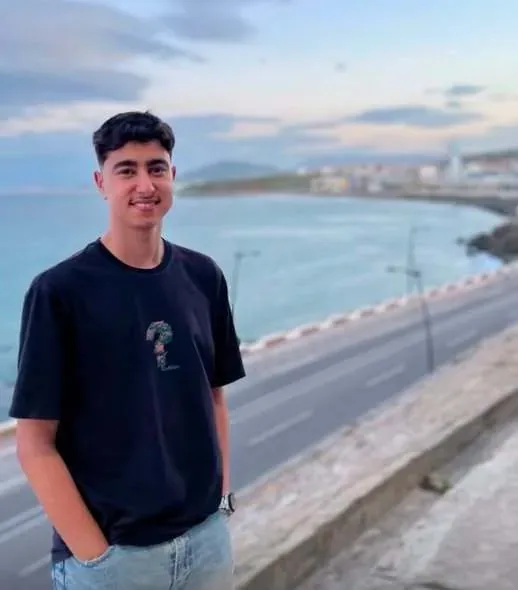
“Where have you gone, Yahya? Oh, son of my brother and of my heart: a fleeting presence that brushed my soul, leaving between us the bewilderment of one who longs and the yearning of one who waits. Here we remain, on the threshold of waiting, awaiting your return just as the faithful await the dawn after a long night; we know that every absence holds a divine wisdom known only to God, and that longing is the sacred deposit carried by those who love.” This is how Younes Al-Omrani, uncle of the young Yahya Al-Omrani, one of the 72,000 people who crossed the border from Morocco to Ceuta by swimming last week, expresses his pain. Since then, there has been no news of him. His family has posted his photo on all forums and social networks within their reach, looking for anyone who has seen him or can provide any information about his whereabouts. They pray that he is among the more than 50 people considered missing and not among the 82 bodies that have arrived at the facilities of the old Military Hospital, where a team of six forensic experts—two from the Ceuta Institute of Legal Medicine and four reinforcements from the Iberian Peninsula—work tirelessly.
Once the autopsies are performed, the Criminalistics service of the Civil Guard sends the digitized fingerprints for identification. Biological samples are also collected to compare with relatives and provide another possible way to identify the deceased. At the time of closing this edition, two people have been identified by their fingerprints as they are registered in Spain. Also, two bodies have been identified through biological studies. It is hoped to do the same with another 28 people thanks to the DNA provided by their families.
“Oh God, you who will one day gather humanity, unite us with Yahya in goodness and bring him back safe and sound, under your protection and care; for our hearts have not lost hope and our souls wait with eager desire. Gather every absent one with their loved ones,” pleads Younes. Like his, dozens of families have not lost hope, although each passing day works against them.
Search on social networks
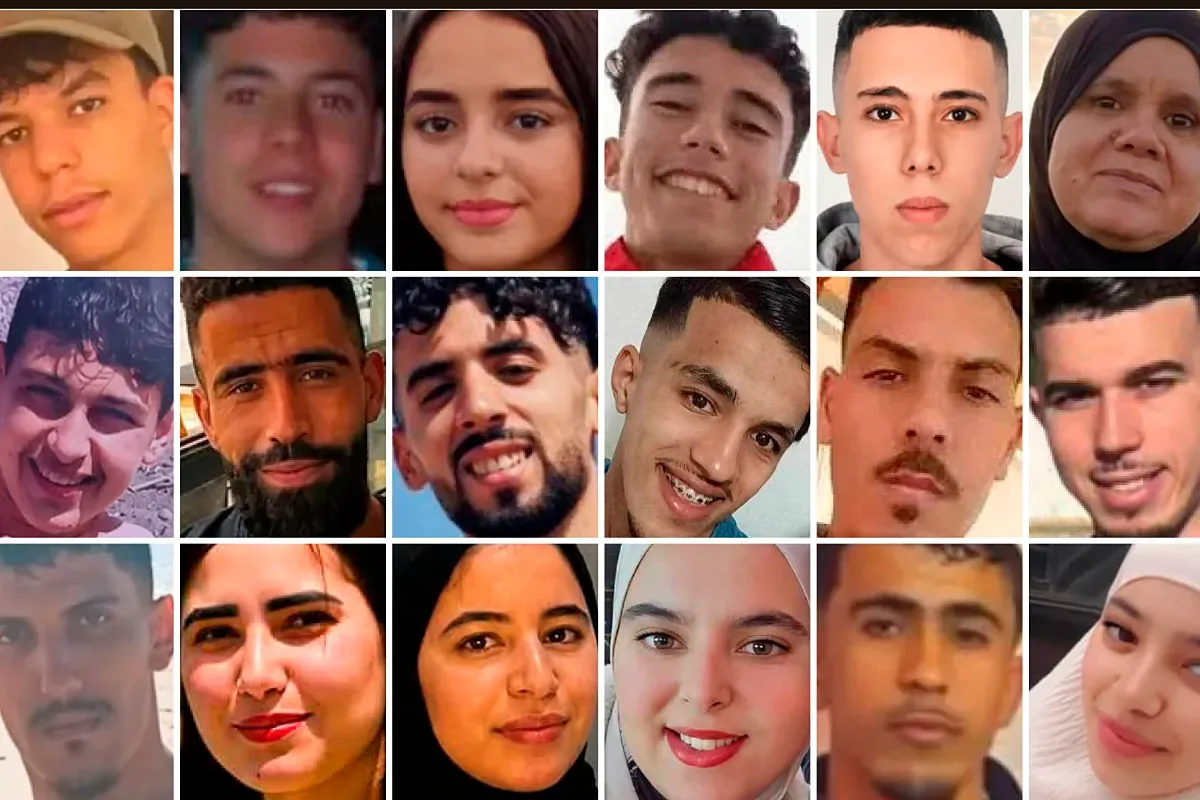
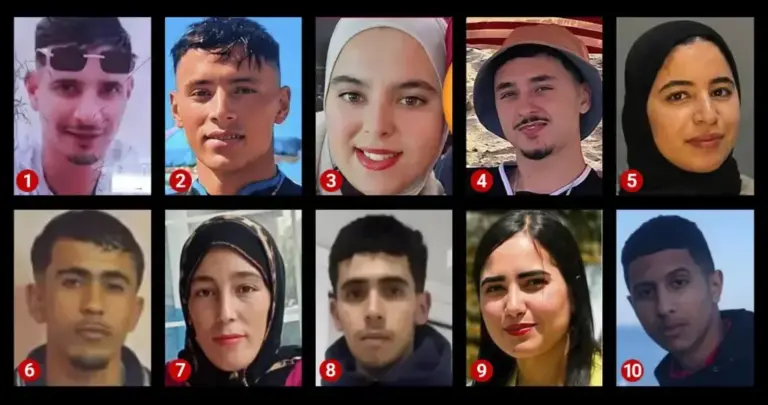
Social networks like Facebook and Instagram are filled with photos of children, women, and men who arrived from Morocco and whose families are searching for them after making dozens of calls to their phones, which remain off or out of coverage amid the greatest humanitarian tragedy experienced in Ceuta in its entire history and one of the most serious recorded in Spain.
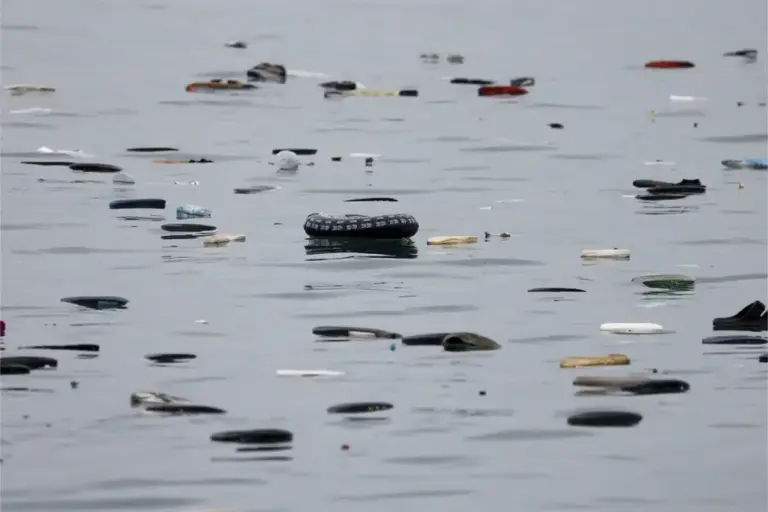
Mohamed Afasi is one of the missing. Barely nine years old, this resident of Tetouan barely knew how to swim when he tried to go around the breakwater with his mother. His family believes he may have clung to one of the floaters that drifted ashore after the human tide spread across El Tarajal beach. Fátima Zahra, 20 years old, was lost track of in the early hours of Friday, July 31. She was wearing light blue jeans. Montasser El Hassani and Houssam Ben Brik are two Tunisians who work in Morocco and came to the border attracted by the rumor that it would be “easy” to cross the breakwater. Mohamed Ahram has not given any signs since July 30. His daughter, less than a year old, awaits him at home…
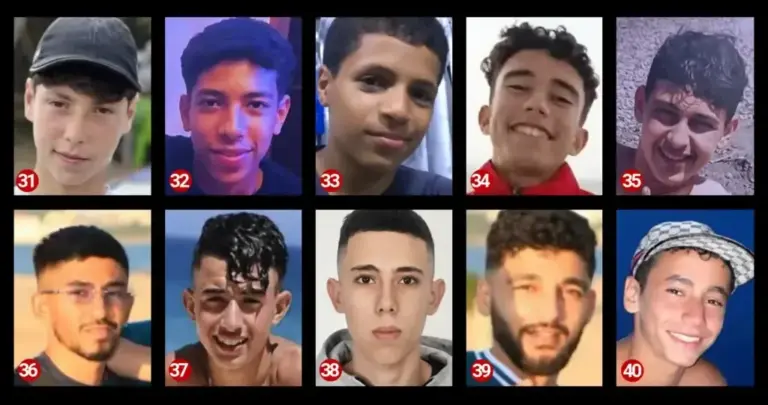
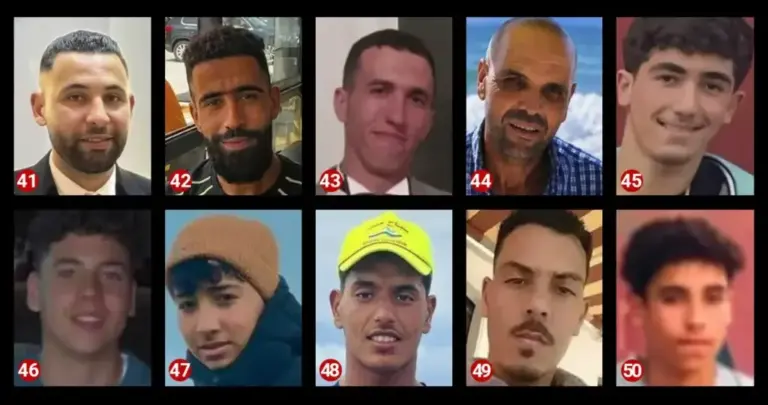
The Moroccan government maintains a low profile and avoids assuming any responsibility for the migration crisis. While they evade explaining how tens of thousands of people could reach the border simultaneously without raising alarms, the families of the missing send out their SOS in different ways. Some create “wanted” posters with artificial intelligence. They detail the age, clothing, and any distinguishing features of the person missing that might help in their recognition. Other users simply show an image of the missing person—often a screenshot or a photo of a photo—with a call for help written in Arabic and a mobile number to contact.
Overloaded call centers
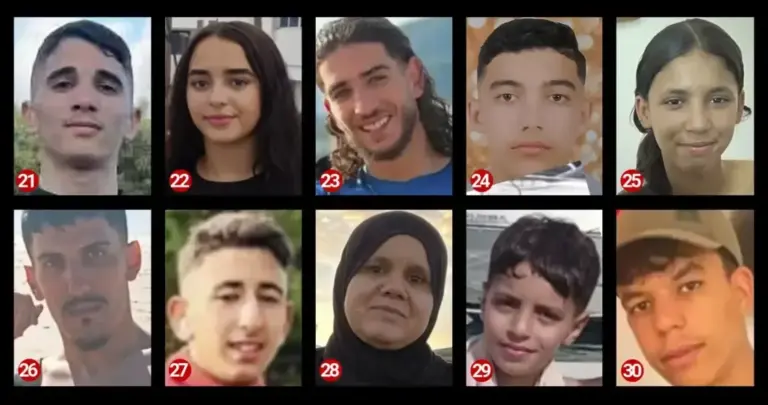
The call centers of the funeral services of the autonomous city remain overwhelmed. The same happens with local media such as El Faro de Ceuta, Sada Tetouan, Tetuán Tube, or Larache 24, the most viewed by residents on both sides of the border. On their social networks, they collect the faces of the missing and when they have a bit more information, they add the names and surnames of the protagonists of the most silent tragedy.
But with each passing day, despair grows. While the Spanish government tries to mitigate its lack of anticipation before a massive mobilization that overwhelmed the border with rapid returns and diplomatic coordination, the death toll rises to 145 according to the NGO Caminando Fronteras, 63 of whom were recovered in Moroccan territory. The Moroccan League for the Defense of Human Rights reports that 32 bodies have been received and more than 400 people have been attended to. But these figures correspond only to information obtained from two hospitals, the one in Castillejos and another health center in Tetouan. Morocco has not updated the list of deceased, which was set at 11 in the first days. Nor has it provided an official timeline of what happened.
Paradoxically, what has already become a political dispute in Spain, the guardianship of unaccompanied minors, is a ray of hope for families. The regional governments of Castilla y León, Extremadura, and Aragón, all coalitions of PP-Vox, have already announced that they will oppose the distribution of unaccompanied migrant minors who arrived in Ceuta. But as the number of registered children incorporated into the reception system rises, the chances increase that their relatives are among them.
The Minister of Youth and Childhood, Sira Rego, says there are 1,342 unaccompanied minors in the autonomous city. She also announces that on August 16 a permanent technical team from her department will arrive in Ceuta to accelerate the identification, reception, and subsequent transfer of children and adolescents to other autonomous communities. Various neighborhood associations, however, raise the number of minors present in the city to 4,800 just in the El Príncipe neighborhood.
More than a thousand minors
On Thursday, during his meeting with King Felipe VI at the Marivent Palace, the president of Ceuta, Juan Jesús Vivas, stated that the city “has not yet returned to normal.” The minister, for her part, acknowledges that the situation remains “very complicated” due to the high volume of arrivals, although she assures that the system “is gradually returning to normal”.
“My intention was for transfers to be immediate, and I hope that relocations can begin in a few weeks,” says Rego. Additionally, many minors remain hidden, not going to reception centers for fear of being expelled. In this regard, the minister assures that the government is working so that “everyone is attended to”, although she admits that the process takes time due to the volume of pending cases.
Priority is given to the most vulnerable profiles, especially girls and children under 13 years old, considering that the migration profile has changed compared to the 2021 crisis. This time, more unaccompanied girls and more “very young” children have arrived.
“Every day that passes without this situation being resolved and without seeking a dignified reception space, what we are doing is allowing these kids, especially these girls, to become victims of all kinds of abuse. We are talking about real children, kids of 10 years old or even younger. There are many under 14 years old,” highlights José Miguel Morales, director of Fundación Sur Acoge.
This newspaper has collected various incidents showing that Ceuta has become a very dangerous place for women, teenagers, and girls who have no roof over their heads. Sabah, a woman with a property she has turned into social housing, tells the story of a mother and her daughter who, after crossing the border, were taken in by a man who went from good Samaritan to demon. “He tried to abuse the minor. When the mother confronted him, the man beat her and expelled them,” recounts Sabah.
Rajaa, a grandmother from El Príncipe, hosted Yuli, a teenager from Agadir, for one night after hearing shouts for help in front of her house at three in the morning. At first, she thought it was a fight, but her daughter warned her that “several men were abusing a girl.” They were five adult men, between 30 and 35 years old, known in the neighborhood.
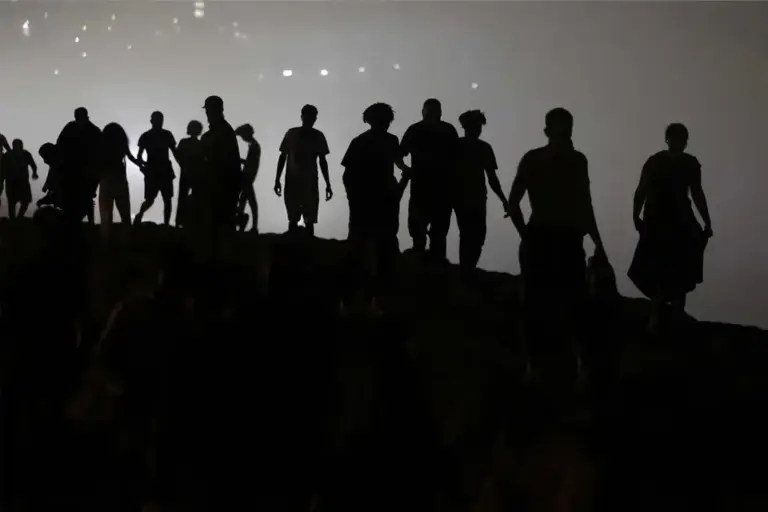
Groups of young migrants, many from sub-Saharan Africa, can still be seen gathered in wooded areas or on beaches. Their main entertainment is improvising soccer games and praying. Some sleep wherever they can, using their backpacks as pillows, surrounded by their personal belongings while waiting for a spot in the overcrowded reception centers.
Looking for a phone
In areas like the El Tarajal Industrial Estate, many minors wander asking for a mobile phone to call their parents or access their social media profiles to reassure their families. There are cases like Ayoub, a minor from Tetouan. His mother is desperate, believing he has died, but the young man managed to cross the border and is in Ceuta waiting for someone to contact him. The announcement with the good news—and a contact phone number—is already circulating on the internet.
A similar message is what the parents of Nada Al-Shiba, a 14-year-old girl who was lost track of on the night of Thursday, July 30, expect. On the streets of Castillejos, the crossing of thousands of people was already being encouraged, with information that there would be no Moroccan control at the border. The same happens at the home of siblings Ikram and Mohamed Trabak, 16 and 13 years old. They disappeared from their home in Morocco during the days when thousands crossed the border to Ceuta. According to their mother, several witnesses assured her they saw the two minors walking through the streets of the autonomous city, although since then she has not been able to confirm their location. The brother of Omar Bourras, 17 years old, also awaits news of him, who jumped into the water with four other coworkers.
Relatives of Faten Ben Amar El Azizi also hoped for positive news. But it was not so. “She was not seeking fame or adventure but a better life and a future she believed awaited her on the other side of the border,” announced the women’s football team she played for, Maghreb Atlético Tetouan, after learning of her death.
Faten’s club laments the high price “paid by many young people” who migrate and see how “dreams turn into nightmares and joy into tears.” The Moroccan Union of Professional Footballers has also mourned Faten’s death on social media and sent condolences to the family.
“Have you seen my son?”
She is one of the four people who have already been identified. A 50-year-old gardener who worked for years in a terraced house in Ceuta is another. The Covid pandemic caught him in Morocco, and he never managed to cross the border again. After several attempts to resume his work in Ceuta, he tried to cross the breakwater during the largest assault on the border recorded in the autonomous city.
Most of the deceased died by drowning or being crushed. “Have you seen my son? Do you know him?” is the desperate cry of dozens of Moroccan mothers who in the last week have come to the border to gather news about the whereabouts of their children days after the massive entry. They place their hands on the metal mesh of the border crossing and look to the horizon hoping to distinguish the silhouette of a son returning along the breakwater, day after day.
“My son lacked nothing; he ate, drank, and had a place to sleep. But even so, he got it into his head to emigrate because he heard people say they had left and shortly after had improved their situation,” says the mother of a 17-year-old boy who managed to contact her with another person’s phone to announce he would return.
To help Moroccan families locate their loved ones, the authorities emphasize the importance of following the official search protocol beyond social networks, which includes formally reporting the disappearance to the Civil Guard or police stations to facilitate identification, something 32 families have already done. In the specific case of minors, a phone number [690 332 028] has been set up to resolve doubts and provide necessary assistance during the process.
The Government Delegation in Ceuta and the Civil Guard have also opened an office to “collect all possible data and information” about the whereabouts of missing persons. It is located in the Customs building of El Tarajal.
Insufficient data
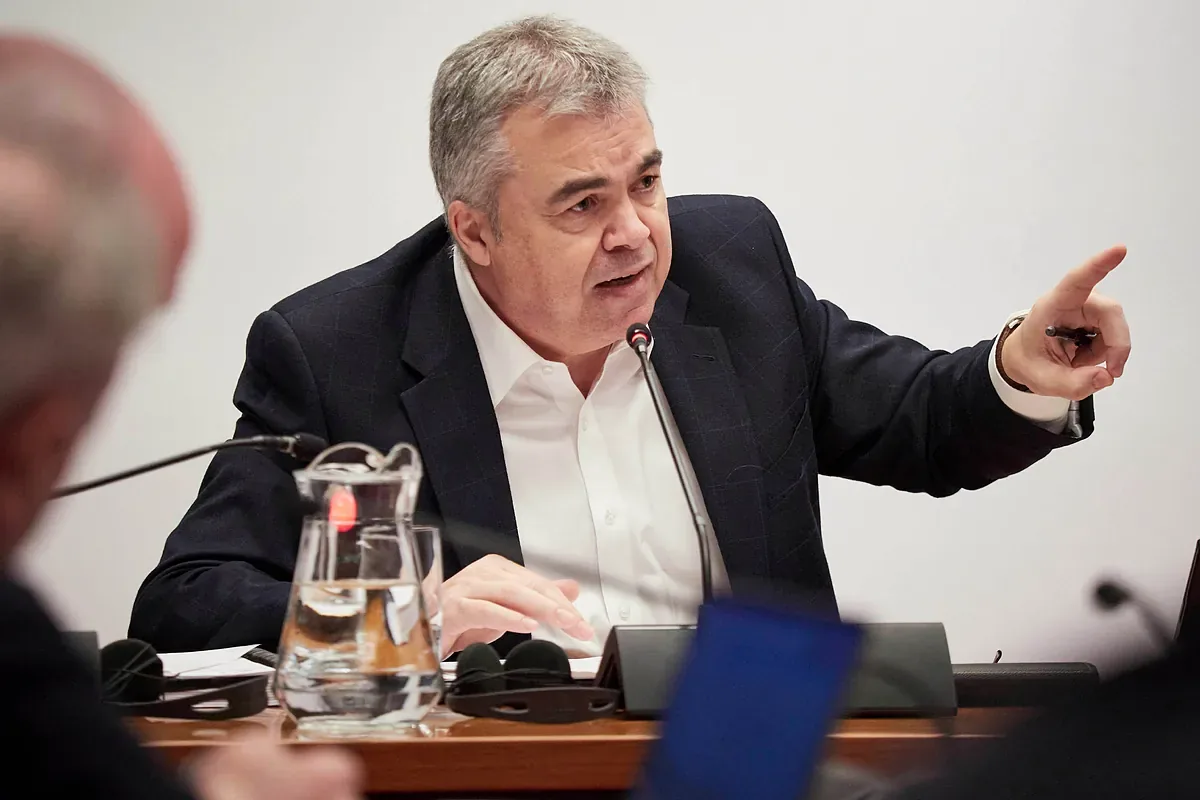
“Many relatives provide data but not enough, which is why it is a painstaking job of searching. And to make the compatibility, a close blood relationship is needed,” explains Sergio Munguía, commander of Criminalistics of the Civil Guard.
After identifying four bodies with fingerprint comparison and DNA tests, it is hoped to do the same with another 28 people in a short time. Likewise, an email has been set up to speed up the confidential reception of information [ce-cmd-ceuta-pjlaboratorio-identificacion@guardiacivil.org]. In its inbox, any detail is key. “All data is welcome, from tattoos or scars to the clothes they wore or if they had rings,” said the commander of Criminalistics.
Fingerprints have also been sent to Morocco in case some of the people being searched for may have died in their waters. “We not only pay attention to the relatives of the missing but also the Red Cross staff is present and psychological support is provided,” assures Munguía.
All bodies located and rescued in Spanish waters are concentrated in the large morgue hastily improvised in the Military Hospital. Several refrigerated chambers with panels and compressors have been installed to house and preserve the bodies until they can all be examined by forensic experts and, in the best case, identified and returned to their families or, otherwise, buried in the Muslim cemetery of Ceuta, whose expansion works have already started urgently.
“My four friends died”
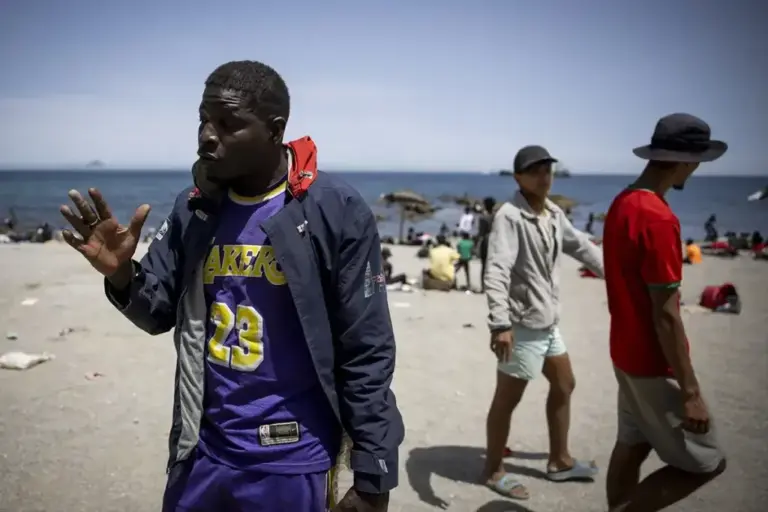
Meanwhile, beaches like Trampolín are the refuge of adult sub-Saharan immigrants who have no roof or relatives seeking to contact them. They come from Sudan, Yemen, Mali, Palestine, or Algeria and sleep around bonfires surrounding a mosque built with stones, wood, and bottles.
Mussa, 20 years old, left Mali with four friends intending to reach Spain. Today only he lives. “My four friends died swimming trying to reach Ceuta,” he says without stopping watching his few belongings. He wears a Los Angeles Lakers T-shirt and a worn windbreaker given to him by a neighbor who saw him shivering. Mussa takes advantage of the presence of journalists to ask how he can apply for asylum or protection.
This is what the relatives of Nizar Ben Zayed, Fouad, Omar Akdi, Hasna El Hichou, Ayman Al-Raboun, Faodiua Rouidi, and many others who are now wandering ghosts hoping to be included in a list that removes them from the status of “missing” are also hoping for, even if they do not know it.