


Night falls and all of Ceuta is an unbearable open-air refugee camp, but even in this, as in everything, there are classes.
The Maghrebis on Trampolín beach warm themselves around makeshift fires after the sub-Saharans were relocated from the reed and cardboard shacks.
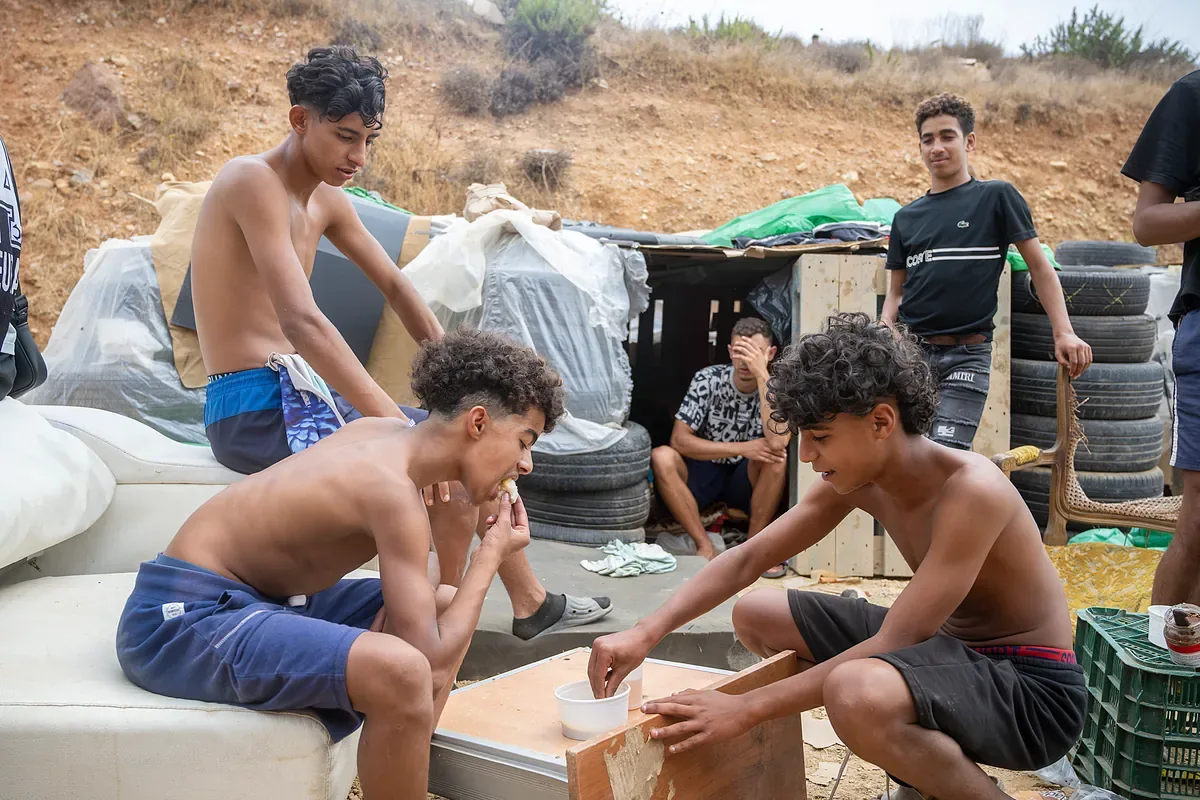
Other Maghrebis scatter to sleep on the surrounding hills, near the CETI, the Temporary Stay Center for Immigrants. The fear of police raids and deportation has returned them to a state of nature, living in the forest, next to La Colina, a housing development of large villas that could hardly have imagined it would have a front-row seat in another humanitarian drama of the 21st century.
The parks, medians, and flowerbeds of Ceuta also host, here and there, thousands of Maghrebi youths who manage to charge their phones and splash some water on their faces (it’s been three weeks without a shower) in bar bathrooms, in a city that is actually as Muslim as Christian (if not more), and more African than European, but did not expect to pay such a high price for its proud “four cultures”: girls and women have avoided the streets for 23 days.
Those who are not doing so badly are the Maghrebis inside the CETI itself. They were already here before the mass jump on July 31. Waiting for the cracks in the Spanish asylum system, tolerated by Madrid and probably agreed with Rabat, to open the way to the Peninsula. The police guarding the CETI say that those who live there go shopping and “to the bars,” that they “move their money” and are already flirting with the European dream.
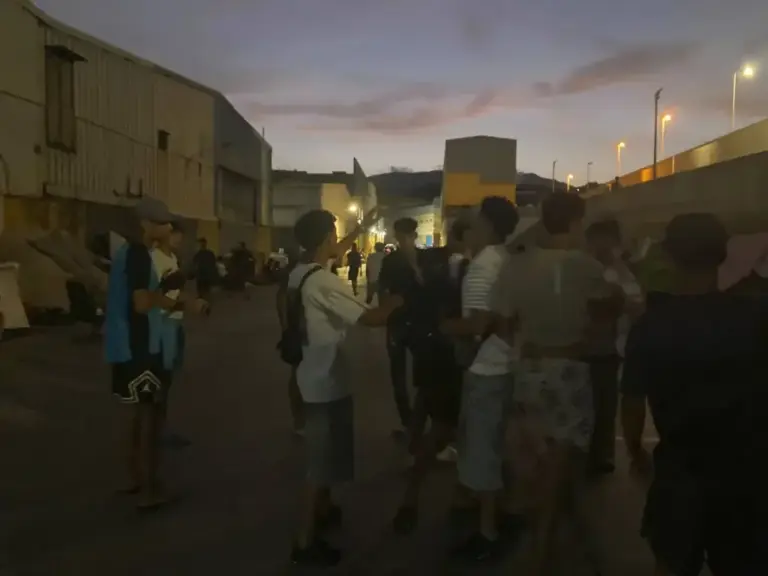
But where everything becomes unbearable, unsustainable, and unacceptable is in a corner of the small triangle of land that is Ceuta next to the Tarajal border. In the two dozen dirty warehouses and sheds that make up the industrial estate of the same name. The failure of the reception system, a true human storeroom of all today’s geopolitical tensions, becomes flesh here. Flesh that suffers, as do the citizens of Ceuta who consider it an “invasion.”
The industrial estate, from which you can almost touch the trees of Morocco on the other side of the border (the one with the famous concertinas, which has recorded several bloody and high-profile jumps), contains about ten or 12 alleys bounded by the warehouses, which seem abandoned and forgotten long before their own construction.
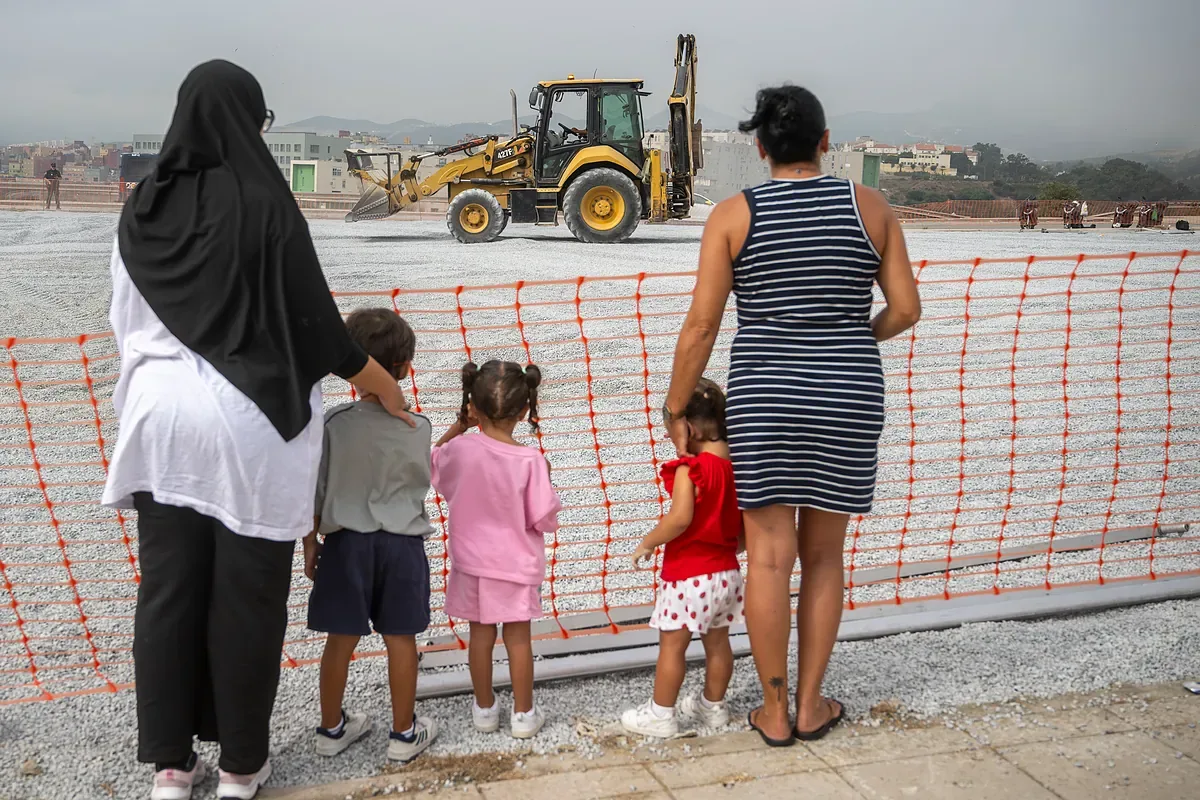
And all those streets are, in every millimeter, in every nook, over all imaginable filth, full of children, women, and families who have been enduring hunger, fear, and rats for three weeks.
On Trampolín beach, in the hills and forests of Ceuta, all, or almost all, are snipers: adults or young men traveling alone who accumulate ties with each other.
The ones in the Tarajal industrial estate are true families who one does not know how they managed to swim a kilometer and a half, with very small children on top and phones and money waterproofed, in an ordeal in which 140 people died already forgotten, because what is urgent is today.
Tarajal is India, Bangladesh. That kind of shantytown, let’s say, ‘pre-industrial.’
Some kids play soccer barefoot, with a battered ball and four truck tires as goals. An old man drags himself on crutches. Impossible to ask him – very few speak Spanish – how the hell he managed to cross like that. A boy shaves others like a medieval barber, with a knife – this is often seen among migrants in Ceuta: the trendy degraded look is very demanding, and poor does not mean unkempt -.
The children’s revelry is framed, in the background, over the somber faces of their parents, the women always with the hijab. Many others returned to Morocco upon realizing clearly that the jump had a difficult or no future. Probably only those who had nothing before jumping stayed, and therefore, as in the song, have nothing to lose.
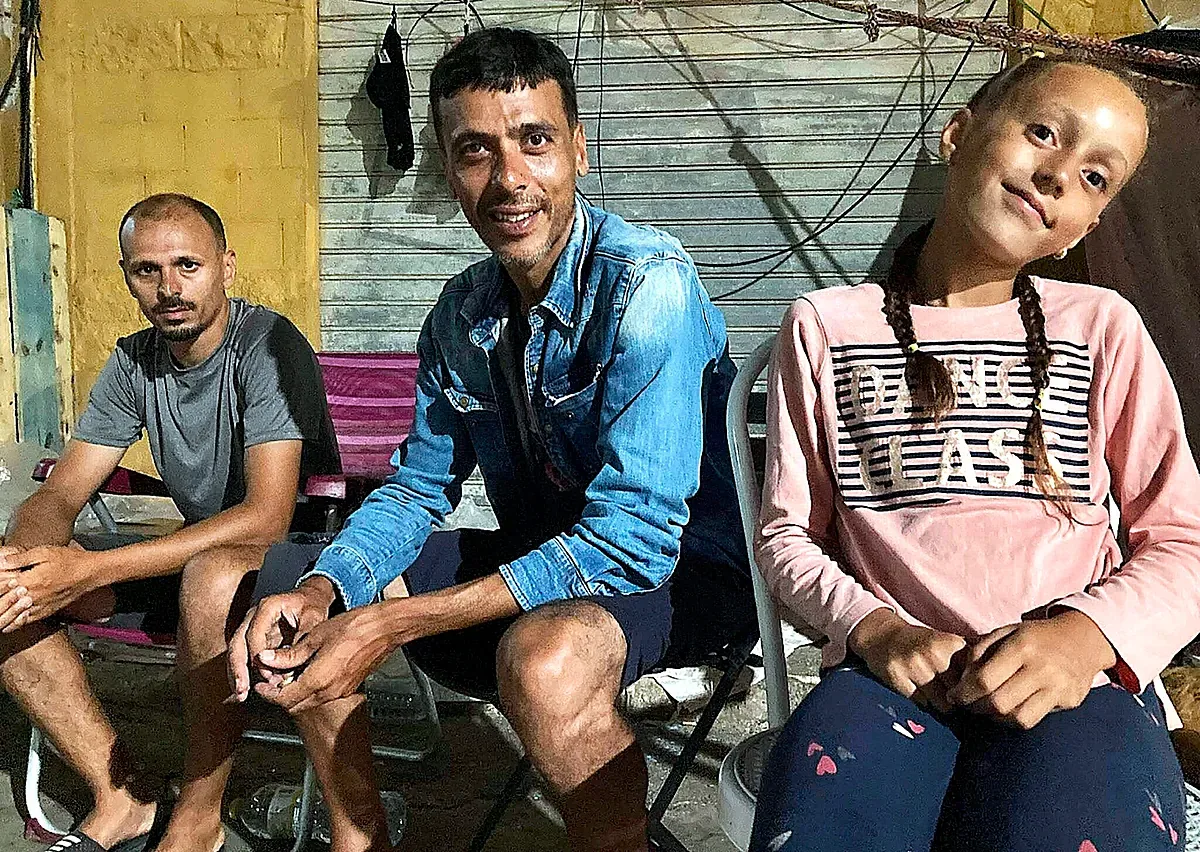
Mustafa is one of them. You can see him there, in the photo. Clean and normally dressed, he could easily pass for Spanish. He is 30 years old, earned the equivalent of seven euros a day fixing televisions in Tetouan, and says, always with a smile and in at least understandable Spanish, that he will not return to Morocco: “I have taken it out of my head.”
The boy, accompanied by his sister, his niece, and a friend, shows us his passport: “I used to enter Ceuta years ago, look.” Indeed, the stamps are visible. “But after 2021 [when the previous big jump was recorded], it was closed, no more.” How did they decide to jump? “We saw on the news that people were jumping. So we did too.” Had he done it before? “No, never. I used to enter Spain legally! But not anymore.”
He only asks for one thing: “To be able to eat. We want to go to Spain to eat. In Morocco, we can’t even eat. I earn 2,000 dirhams, 200 euros, a month. Life is very expensive. I can’t do anything anymore.” His friend, Jouchal, worked in “a milk factory”: “We just want a future”. Mustafa’s sister asks him to tell us his story: “He is 35 years old and unemployed, a single mother. He has no family, only me!”.
Mustafa realizes that both he and his family are in danger in Tarajal: “Yes, we know, but God will do,” he repeats like a litany. One of the three always keeps watch at night, “in case something happens.” He admits there are fights “every day,” but in the almost two nighttime hours the reporter spends there everything is peaceful – in fact, everyone wants to be your friend -.
“This is like a war, like a war,” admits Mustafa. Where do they relieve themselves? He shrugs. How does the local population, who understandably suffer from them as well, treat them? “All good, very patient.” Where do they get the money? “There are people who cross the border or send it to others here, and they give it to us,” he explains.
Jouchal, very quiet, admits he has been “three days without eating.” Mustafa intervenes: “Well, you know they only give [Red Cross] one meal a day and, of course, we ration it.” The hunger games have been stalking for three weeks now, and whatever is left.
While we talk, little Ritaj, his eight-year-old niece, does not stop running back and forth. Two months ago she went to school. Now she stars, along with several thousand more people, in a humanitarian drama, but maybe she will be the one to end up taking the whole family to Spain if the minors are transferred to the Peninsula. “She is the future, it has to be her,” says Mustafa.
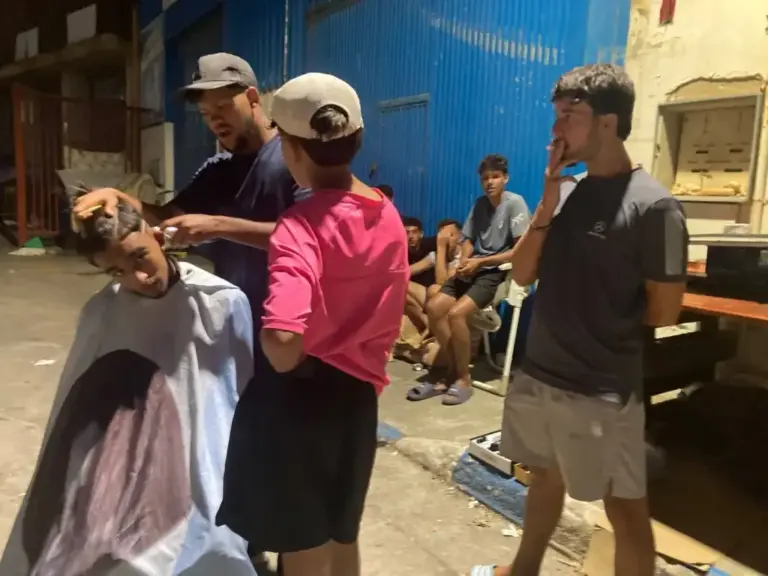
It is past midnight and no one sleeps in the Tarajal industrial estate, least of all the children. Insomnia is law, because any danger lurks.
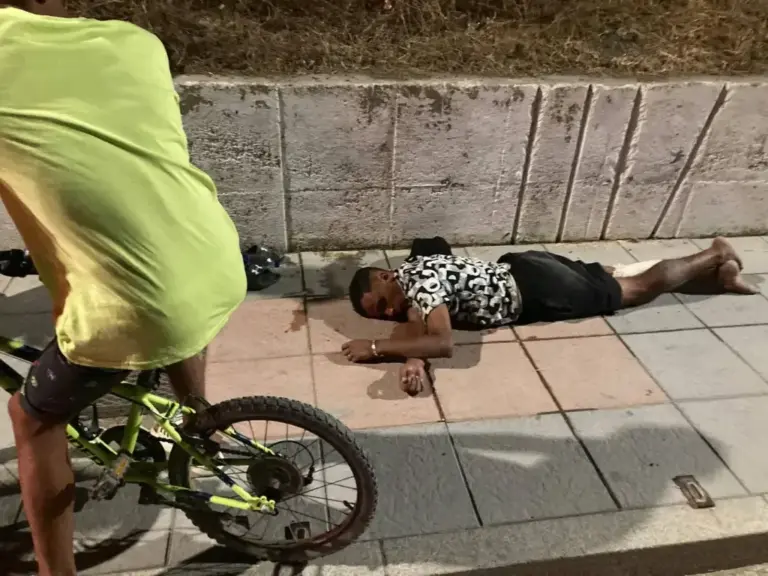
On the way out, a group of Maghrebis surrounds one lying flat on the sidewalk, as if fainted, face down. We call 112. “Yes, they already called a few minutes ago, a resource has been sent,” they answer us. “15 minutes ago,” says one of the boys. “A lot of wine”, says another, looking at the fallen man. And they sit waiting next to two piles of garbage. Everything is waiting these days in Tarajal.