








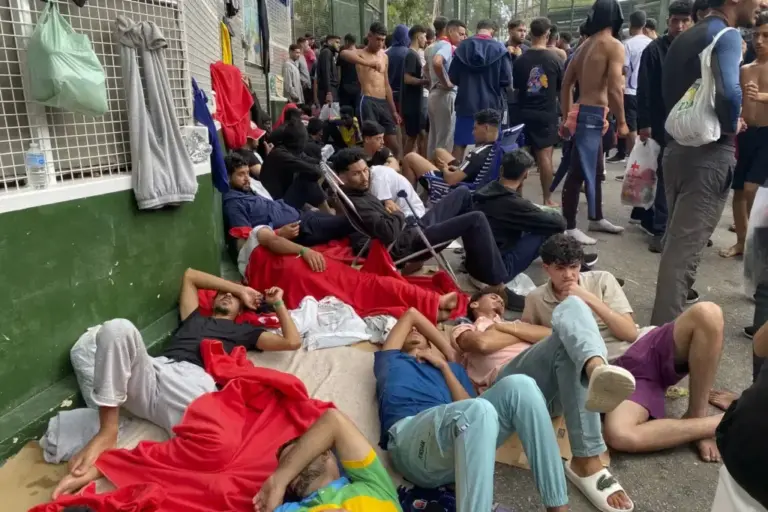
Fires and now a migration crisis. More than 100 minors and hundreds of adults, the vast majority of Maghrebi origin, arrived in Ceuta in the early hours of Thursday, July 30. In less than two weeks, around 2,000 people have managed to access Ceuta through this route, representing the episode of greatest migratory pressure recorded in the city since the May 2021 crisis.
In this situation, all members of the Board of Spokespersons of the Ceuta Assembly, including the PSOE, have demanded this Thursday that the central government close the border and deploy the army, as well as declare a national emergency under the national security regulations due to the “qualitative leap” that, according to them, the migration crisis experienced by the city has undergone due to the massive arrival of people from Morocco.
The request was made after an extraordinary and urgent meeting held at noon, in which the political groups agreed to request three immediate measures from the Executive: the declaration of a national emergency in accordance with national security legislation, the reinforcement of the State Security Forces and Corps along with the deployment of the Army to “guarantee the inviolability of the border and citizen security,” and the closure of the Tarajal border.
Meanwhile, the central government assures that four ministries –Interior; Inclusion, Migrations and Social Security; Territorial Policy; and Childhood– are working “coordinately” to try to manage this crisis. The Executive led by Pedro Sánchez argues that it cannot declare a national interest emergency because, they point out, the state civil protection regulations do not consider migratory flows as a risk of the National Civil Protection System nor establish special plans, basic guidelines, or specific civil protection instruments for its management. “Therefore, it is not possible to activate this mechanism, as requested by the president of the Government of Ceuta,” sources from the Executive state.
Government sources explain that the specific risks contemplated in the civil protection regulations that may lead to the declaration of a national interest emergency are the natural and technological risks expressly provided for in the National Civil Protection System Law: floods, seismic and volcanic risks, adverse meteorological phenomena, forest fires, accidents involving hazardous substances, nuclear and radiological risk, and technological risks.
Indeed, article 15 details the types of plans and specifies that Special Plans are those aimed at addressing the detailed risks and may be state or regional, depending on their territorial scope of application, and will be approved by the competent Administration in each case.
The same regulation establishes in its article 28 that national interest emergencies are those that require, for the protection of people and property, the application of Organic Law 4/1981, of June 1, regulating states of alarm, exception, and siege; those in which it is necessary to foresee the coordination of various Administrations because they affect several Communities and require a supra-regional resource contribution; and those that, due to their actual or foreseeable dimensions, require national-level direction.
In response to these explanations, the PP supports Vivas’s request. “It is evident that the Government of Spain must act in the face of this migratory collapse,” said the PP secretary general, Miguel Tellado, this Thursday.
From the party headquarters on Madrid’s Génova street, the leader described the flood of migrant arrivals swimming to Ceuta as a “full-fledged migration crisis” and, pointing out that the reception services of the autonomous city “are overwhelmed,” he insisted on emphasizing that “it is the Government that must act.”
The popular stressed that it is the central Executive that has immigration powers, thus attacking La Moncloa: “If we are in this situation, it is because we have a Government that, certainly, has neglected its own responsibilities in immigration matters.” For Tellado, Sánchez’s Executive “has neglected the control of Spain’s borders, which is the same as neglecting Europe’s borders.”
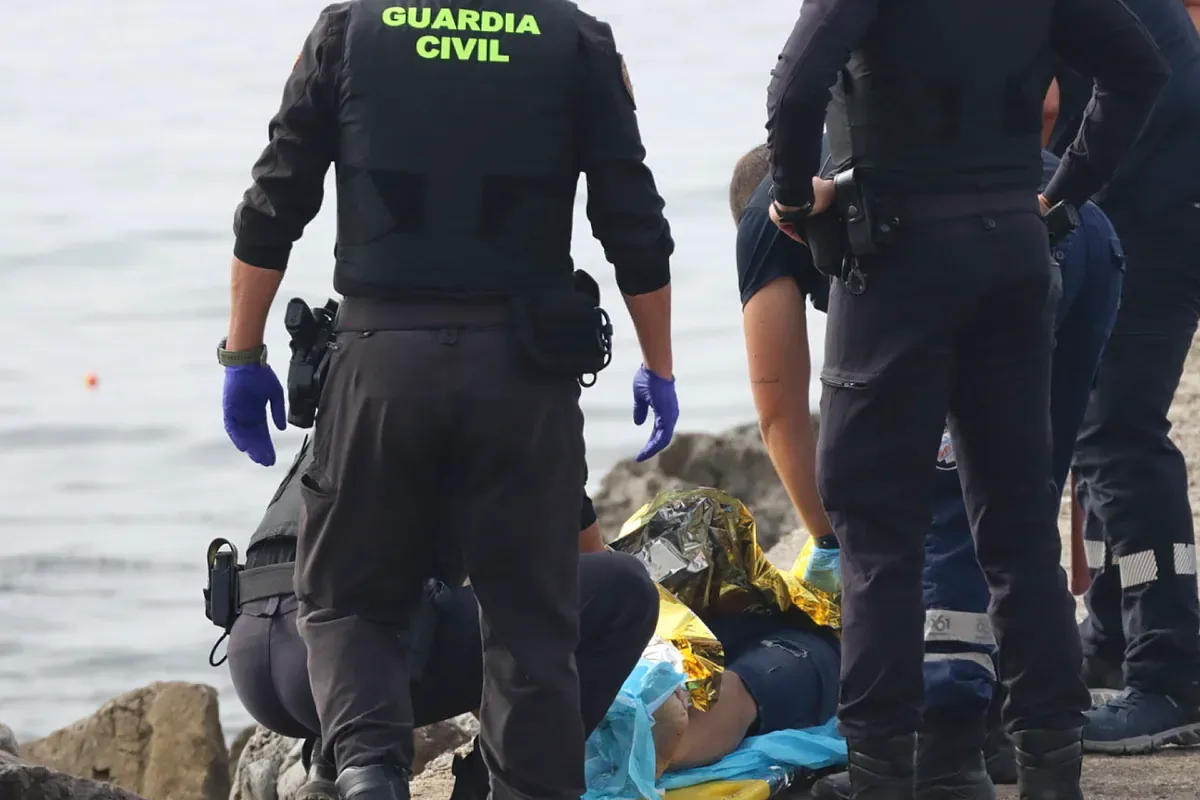
Both the Minister of the Interior, Fernando Grande-Marlaska – who will travel to the Autonomous City this Friday – and the State Secretariat for Security are in “permanent contact” with the president of Ceuta and the Government Delegation. From the Interior Ministry, they explain that “resources, means, and personnel have been reinforced in the last week” with the aim of “guaranteeing both security and migratory control as well as the necessary humanitarian attention, with the goal that no human life is endangered at sea.” This week, four lifeless bodies have been recovered at different points along the Ceuta coast.
Executive sources also point out that Morocco “is cooperating loyally and permanently with Spain and collaborating closely to face this situation.” They also highlight that the intervention of Moroccan security forces “is stopping the arrival of numerous people trying to access Ceuta from Moroccan territory.”