






Of the more than 50,000 immigrants who have entered Ceuta in recent days by storm, by land and sea, many still remain, an unquantified number, wandering the streets of the autonomous city, hidden in some cases and mostly wandering aimlessly.
In the center, despite being literally sealed off by police, on the morning of this Saturday it was possible to see many groups of immigrants, mostly Moroccans. They were easily identified as part of the migratory avalanche that has put the city in check in the worst migratory crisis remembered. Tired, dirty, some barefoot and many looking for something to eat in the shops that have timidly begun to open. Others were looking for a mobile phone from which to call their relatives.
The situation, as the residents of the historic center of Ceuta say, has changed radically. You no longer see a human mass on the street, but not all have disappeared or left, despite the official versions that point out that practically the 50,000 who entered are already back on the other side of the border.
In fact, the security forces, whose presence has multiplied in recent days, strive to point out the way back to the groups of immigrants they find and escort them until they head towards the border.
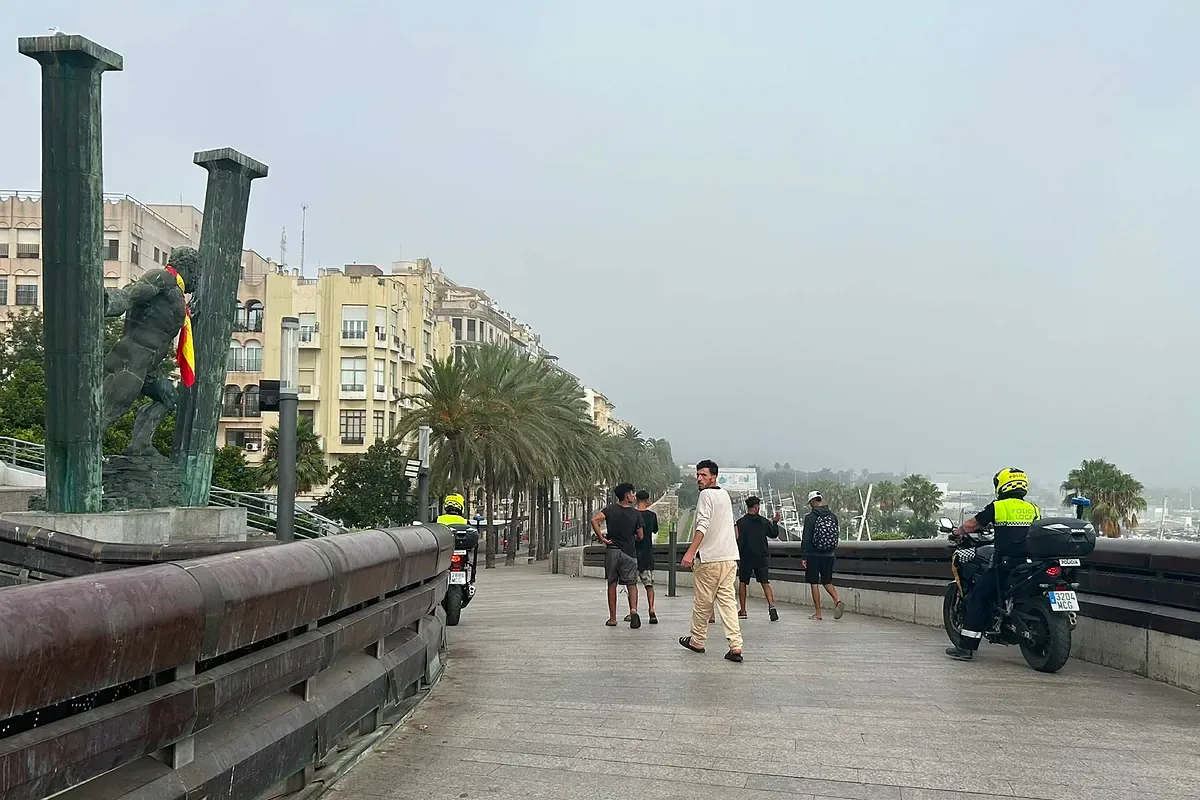
Along Paseo Alcalde Sánchez Prados, Plaza de la Constitución, or Paseo de la Marina Española, early in the morning, the Ceutans who have begun to leave the lockdown they have lived in for the last 24 hours cross paths with the Maghrebis who have so far escaped the return operation announced by the Ministry of the Interior.
As you leave the center heading towards the Port or Tarajal, they are no longer isolated groups without direction, but a silent and constant march of immigrants, mostly young people, who are returning.
But more than in the center, those who have not yet returned have chosen the neighborhoods to try to go unnoticed by the spectacular police deployment. In Manzanares, Polígono, or Villa Jovita, the presence of immigrants is more evident, while the presence of security forces is lower.
In many of them, such as Villa Jovita, some neighbors have organized into improvised patrols to watch their streets tonight and have even placed barriers to prevent the access of groups of Maghrebis who have dispersed throughout the city.
The goal was to prevent incidents and there have not been too many, although in recent hours isolated altercations have been recorded, some with serious consequences, among the immigrants themselves and against the Foreigners’ Internment Center, the CETI, which is closed tight, already saturated before this latest avalanche.
The National Police had to intervene last night at the CETI after hundreds of Maghrebis who arrived since Thursday and especially Friday gathered at its doors, wanting to enter.
According to Europa Press, brawls have occurred that forced workers to take refuge inside until the Police managed to move the immigrants away from the center’s entrance door, where, as an exception, the entry of women and children is allowed.
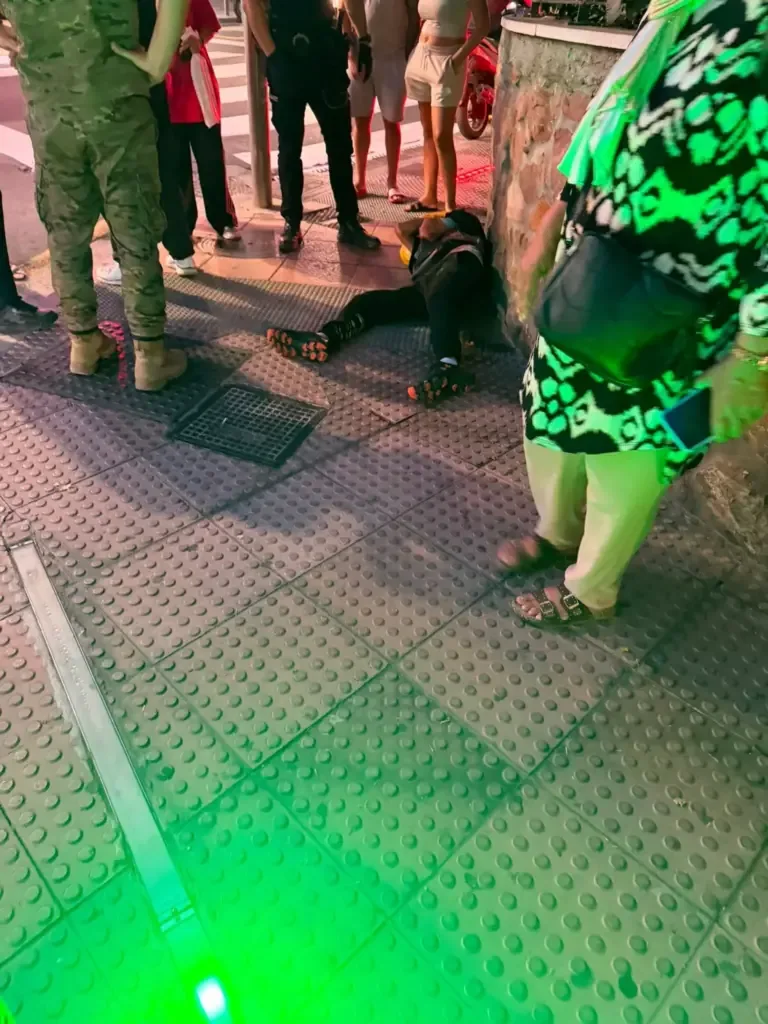
In other areas, such as near Paseo de la Marina, fights with injuries have occurred, as confirmed by witnesses of a stabbing of a young man this very night that set off alarms in the area.
“We were very scared,” a young woman who witnessed the stabbing told EL MUNDO.
There is still tension and uncertainty in a city that, little by little, is beginning to recover normality after its residents barricaded themselves in their homes, afraid to go out, this Friday. Ceuta has 83,000 inhabitants and in an instant was repopulated with 50,000 immigrants. Most of the city’s businesses closed to avoid looting. Supermarkets, clothing stores, and restaurants lowered their shutters. The few grocery stores that remained open accumulated queues throughout the day.