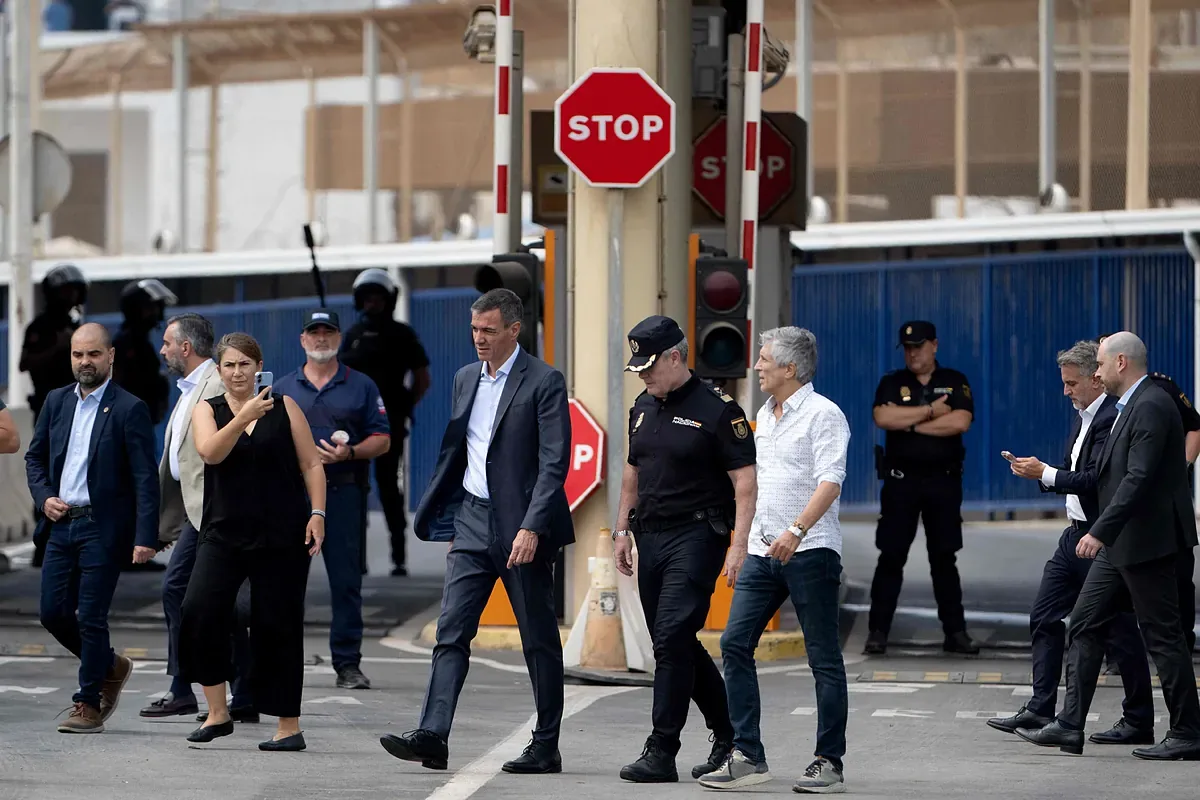








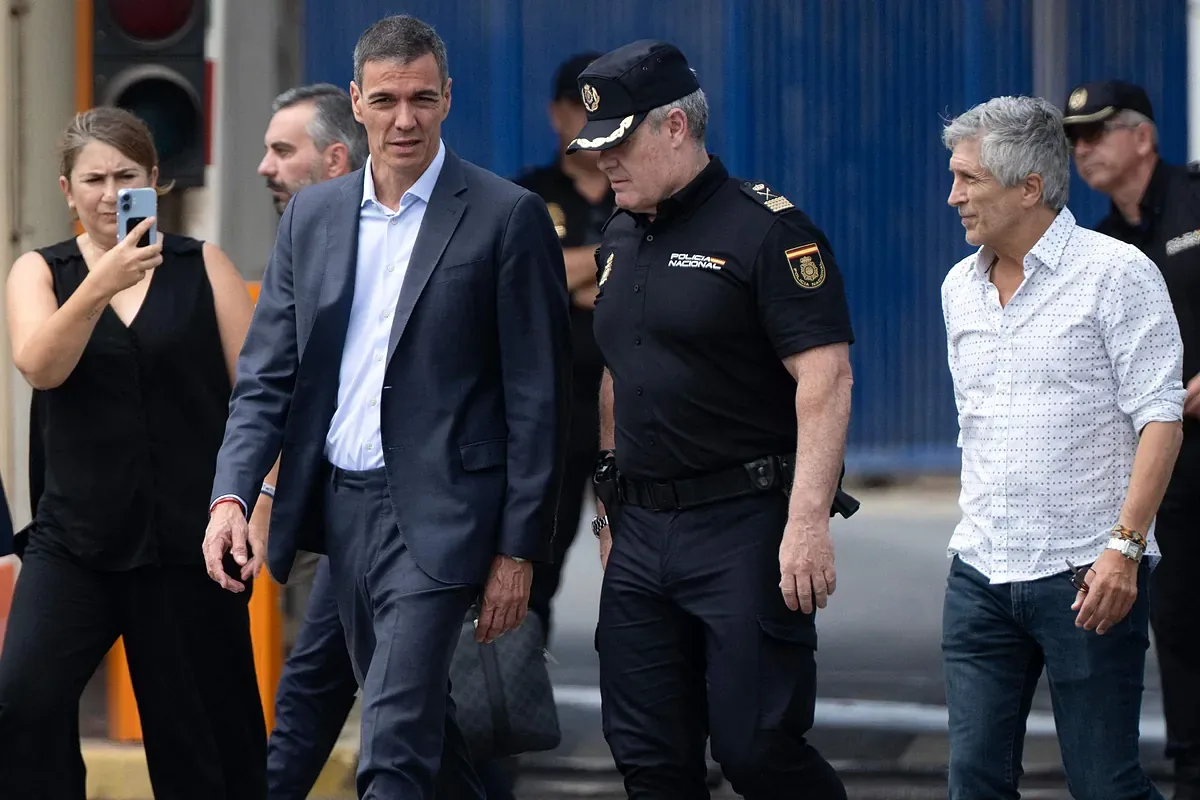
The Prime Minister, Pedro Sánchez, has requested this Saturday that European authorities convene an extraordinary videoconference of the Interior Ministers of the 27 “urgently” in response to what he has described as a “selfish, polarizing, and illegal reaction” from member states that have criticized his migration policy following the influx of 50,000 people who swam into Ceuta this week.
In a letter sent to the President of the European Commission, Ursula Von der Leyen; the President of the European Council, António Costa; and the Prime Minister of Ireland, Micheál Martin, Sánchez argues that in less than 48 hours his government has managed to “fully restore border control, provide extensive humanitarian assistance, return practically all migrants who crossed irregularly, and prevent any unauthorized movement towards continental Europe.”
“All this has been achieved in close coordination with Moroccan authorities and with very little support from other European states, while applying the effective and solidarity-based migration policy that Spain has consistently developed over recent years,” the Prime Minister states in his letter. He recalls the aid his country provided to other community partners “when they faced similar crises” and cites the reception of irregular foreigners who arrived in Eastern Europe through Belarus in 2021 and in Lampedusa in 2023.
Despite “these indisputable facts,” Sánchez continues, “the reaction of European governments in recent hours has been quite asymmetrical.” “Most have shown us their support and solidarity and offered their help. Others, however, have chosen to attack Spain and call for its temporary exclusion from the Schengen area,” he adds in a direct criticism of Italy, although without naming it.
According to the Spanish Prime Minister, “this attitude, driven by prejudice, false news, ignorance, or political interests, is not only contrary to European law, humanitarian law, and the principles of solidarity” among member states. “It is also contrary to Europe’s long-term interests and the most basic common sense, because Ceuta is not part of the Schengen area, because there are hardly any irregular migrants left without being returned, and because Spain is, according to Frontex, one of the least permeable external borders of the European Union.”
Read more «A Morocco got out of hand»: the first analyses on the Ceuta avalanche point to Rabat
Sánchez again points to the country led by Giorgia Meloni, indicating that the number of irregular entries through Spanish borders “represents half of that recorded, for example, in Italy in recent years (2021-2026).” The earlier reference to Belarus is, in turn, part of an implicit response to the Polish Prime Minister, Donald Tusk, for saying that Spain “should take example” from his country, which tightened asylum laws and built barriers on the border with the former Soviet republic.
Pedro Sánchez’s government suffered harsh and massive reproaches from its European allies yesterday over its migration policy and the laxity with which it has faced the Ceuta crisis. The most radical in its reaction was Italy’s Giorgia Meloni, who from early on threatened to suspend the Schengen treaty with Spain and tighten controls with our country again. As the hours passed, other countries joined the argument with more or less force: Finland, Sweden, Austria, and Denmark. Finally, Italy kept its word. It is clear that none of the European partners wants to be an indirect recipient of these young Moroccans who entered the autonomous city without papers.
Although Italy does not share a land border with Spain, the measure will affect people traveling by plane or boat between the two countries, who will have to show a passport to enter the territory. The Italian Ministry of the Interior stated in a communiqué that it had also agreed with Paris to reinforce controls along the Franco-Italian land border to try to prevent the crossing of irregular immigrants. This is mainly a political gesture of repudiation, since in reality Ceuta and Melilla are outside the Schengen area, and therefore identity checks are carried out when leaving either of the two autonomous cities.
This decision can be taken unilaterally by European countries in the face of a “supervening threat”. But the decision and the way it was announced did not please the Spanish government, which accused Meloni of “demagogy” and called the Italian ambassador for consultations.