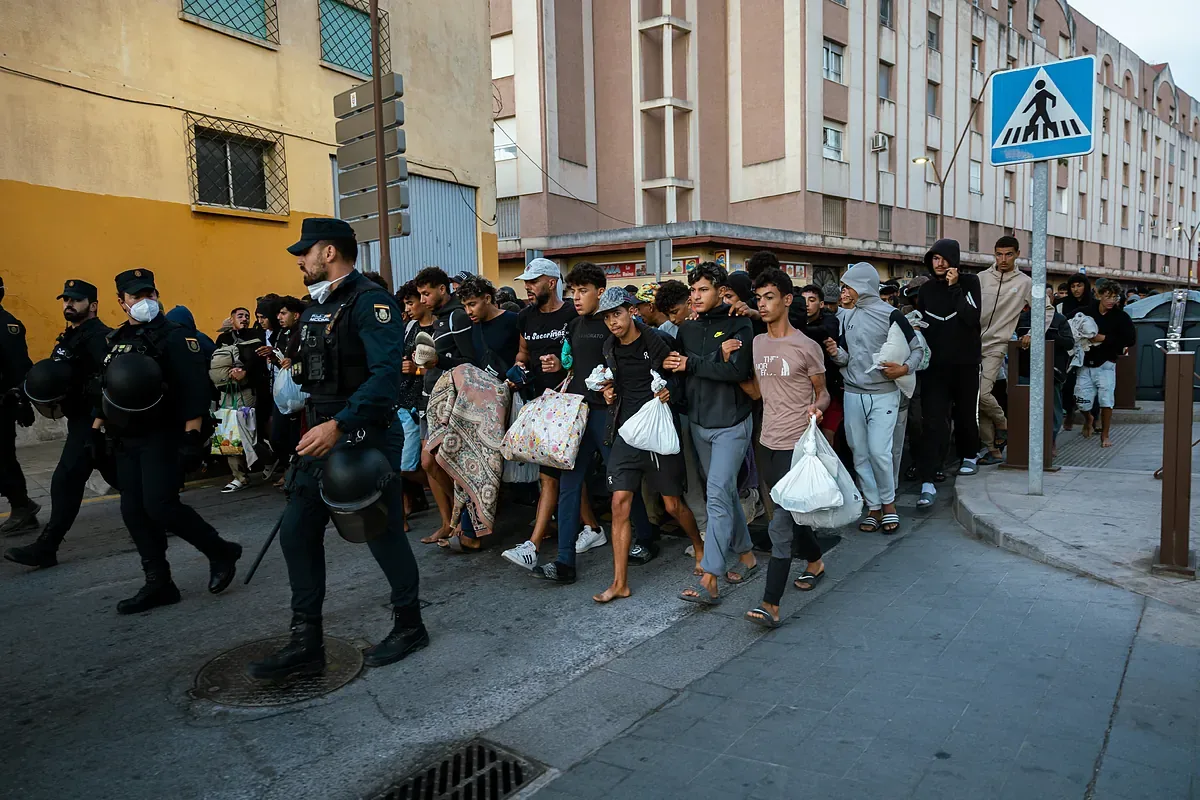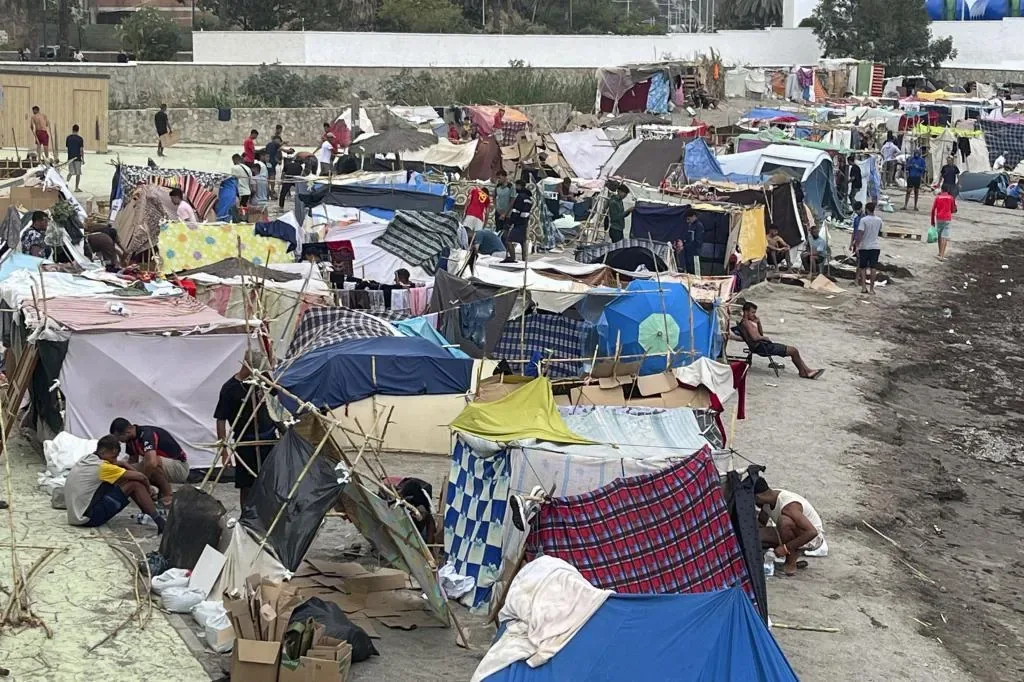







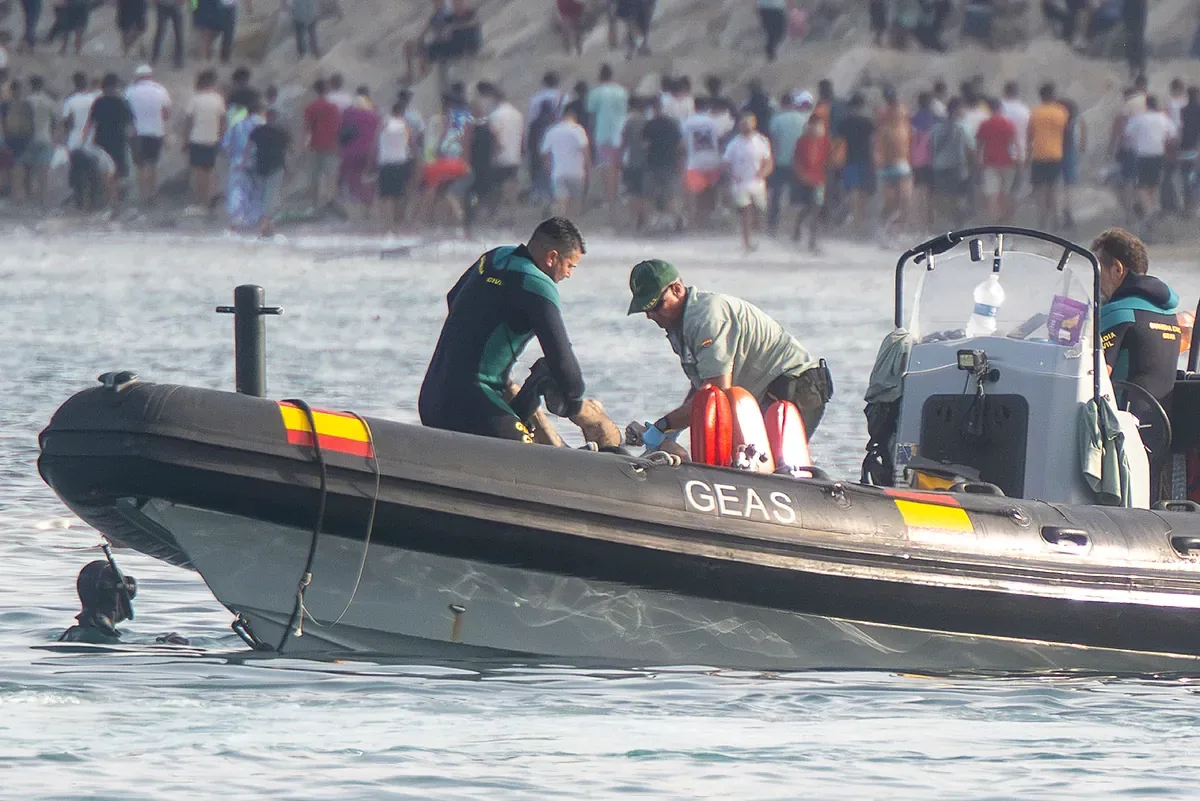
The scene has been repeating since Thursday in the Ceuta waters closest to the Tarajal border. Inflatable boats from the Maritime Service of the Civil Guard waiting for a signal to hoist the lifeless body of some of the 60,000 migrants who entered in a rush, most swimming, and who did not manage to reach solid ground.
The bodies of the victims of the worst migratory crisis in recent Spanish history – not to mention Ceuta – are hoisted onto boats and transferred to the shore with the help of volunteers from the Spanish Red Cross and, from there, to the port.
Although the latest figure confirmed by the Government Delegation in the autonomous city is 72 dead, those recovered in Spanish waters, government sources in Ceuta specify, already speak of 90 and the number could be even higher, more than one hundred according to some sources, as the bodies arriving in the Moroccan zone must be added, which the authorities of that country are neglecting.
The migratory wave from Morocco has not only overwhelmed the city’s humanitarian care capacity, its services, and a population that literally had to confine itself amid the chaos generated by a mob of men (mostly young), women, and children wandering the streets. The seams of the Ceuta forensic services have also burst, absolutely saturated by an unprecedented number of deaths in barely 48 hours.
To the point that the old Military Hospital of Ceuta, closed and unused since 2018, has had to be hastily converted into a large morgue where the bodies of migrants, mostly men and Moroccans, that the waters are returning in a constant trickle, are being stored.
Initially, according to sources close to the operation, the dead were placed in an area set up in the Ceuta port and at the base of the Maritime Service of the Civil Guard itself, with the support of a refrigerated truck and other provisional spaces for the preservation of the bodies.
But, faced with the overflow of the facilities, the Government of Ceuta has made the old Military Hospital available to the Institute of Legal Medicine (IML), responsible for this operation and the corresponding autopsies.
The IML already had a preservation chamber there, but capacity has been multiplied with additional refrigerated chambers. Work at the Military Hospital has been nonstop in recent hours to adapt, specifically, its old mortuary.
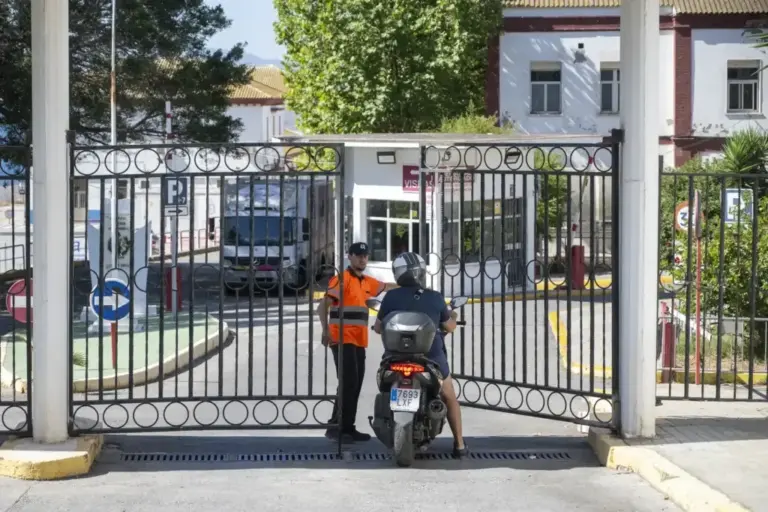
The Military Hospital’s doors, closed and guarded by security personnel, open from time to time to let through the black vans that transport the bodies and vehicles carrying necessary materials for forensic work. A motorcyclist arrived early this Sunday with a package of surgical gowns for the autopsies.
With prefabricated panels and cold compressors, transported by military trucks, chambers have been set up where the bodies of the unfortunate who lost their lives in a desperate crossing can remain while the forensic experts, who work around the clock, perform autopsies before they can be buried.
The two permanent forensic doctors of the Ceuta Institute of Legal Medicine have been joined in recent days by four others from the Iberian Peninsula. Even with reinforcements, it is not expected that the autopsies of all the bodies will be completed until two or three days from now.
Activity in the improvised large morgue at the hospital is frantic and early this Sunday the priority was “organizing the bodies,” according to details given to EL MUNDO.
And here comes another problem because the Muslim cemetery of Ceuta could become overwhelmed if it has to receive all the dead migrants. Although the second phase of the expansion works promoted by the local government was completed last December, the next phase was not planned until a few months from now and with the current capacity, the burial of the hundred victims of this crisis would fill the Sidi Embarek necropolis.
For this reason, sources from the Ceuta Health Department indicated, an emergency action has been approved to immediately undertake the expansion works. To the point that the idea is for them to begin this very Monday.
To get an idea of the situation it faces, in a “normal” year, these sources pointed out, around 20 deaths are recorded in Ceuta. In 2024 there were 23 and in 2025, an already exceptional year, there were 46. In a whole year. And these days, in just over 24 hours, there have been almost one hundred sudden deaths.
Read more Sánchez turns his migration policy into a European problem