




Just half an hour ago, Carlos raised the shutter of his shop on Paseo Alcalde Sánchez Prados, the main artery of Ceuta, after the entire city closed for 24 hours following the avalanche of immigrants – more than 60,000 arriving between Thursday and Friday – that plunged the city into chaos.
Read more Sánchez turns his migration policy into a European problem
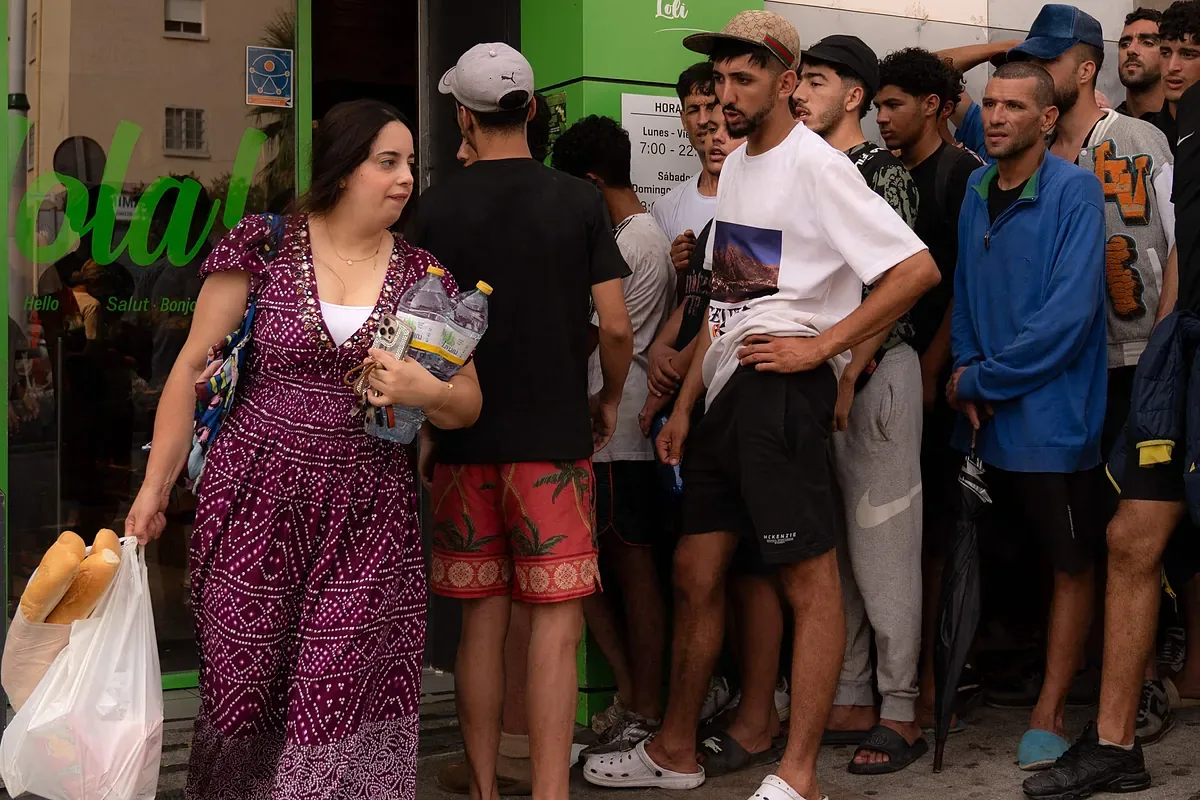
At the entrance of the business – where he sells a bit of everything – lots of bottles of mineral water are stacked, which during this lockdown have been one of the most sought-after products. Especially by the Maghrebis who arrived at the shore of Tarajal beach with little more than what they wore and, in many cases, with minors to feed and give drink to.
Carlos, a Barcelonan who emigrated to Ceuta decades ago, says that “the only bad thing was that there were many” and that it was that, and the lack of foresight by the authorities, that forced the city to be paralyzed for an entire day.
He also experienced the 2021 migration crisis in the same place, “but what happened these days has nothing to do with it, this is exaggerated” and he does not spare criticism of the management, especially of the Government and the president, Pedro Sánchez. “It has been a total disaster,” he exclaims, without reservations.
Antonio and Margot finish their breakfast a few meters from Carlos’s shop in a café that also reopened this Saturday. Not all businesses have opened, some remain closed and others serve with some extra security measures, such as the shutter half lowered.
“This will not be the last time,” predicts the couple, both retired, he with a sports bag to go swimming afterwards.
The feeling is the same no matter who you ask in the bars and shops that dared to open. “The situation has improved a lot, the worst has passed, but not everything has passed,” describes Carlos, no longer seeing hordes of immigrants on the streets, but the people of Ceuta have the lesson well learned and know that “this can happen again at any moment,” as Antonio says when he gets up already on his way to the pool.
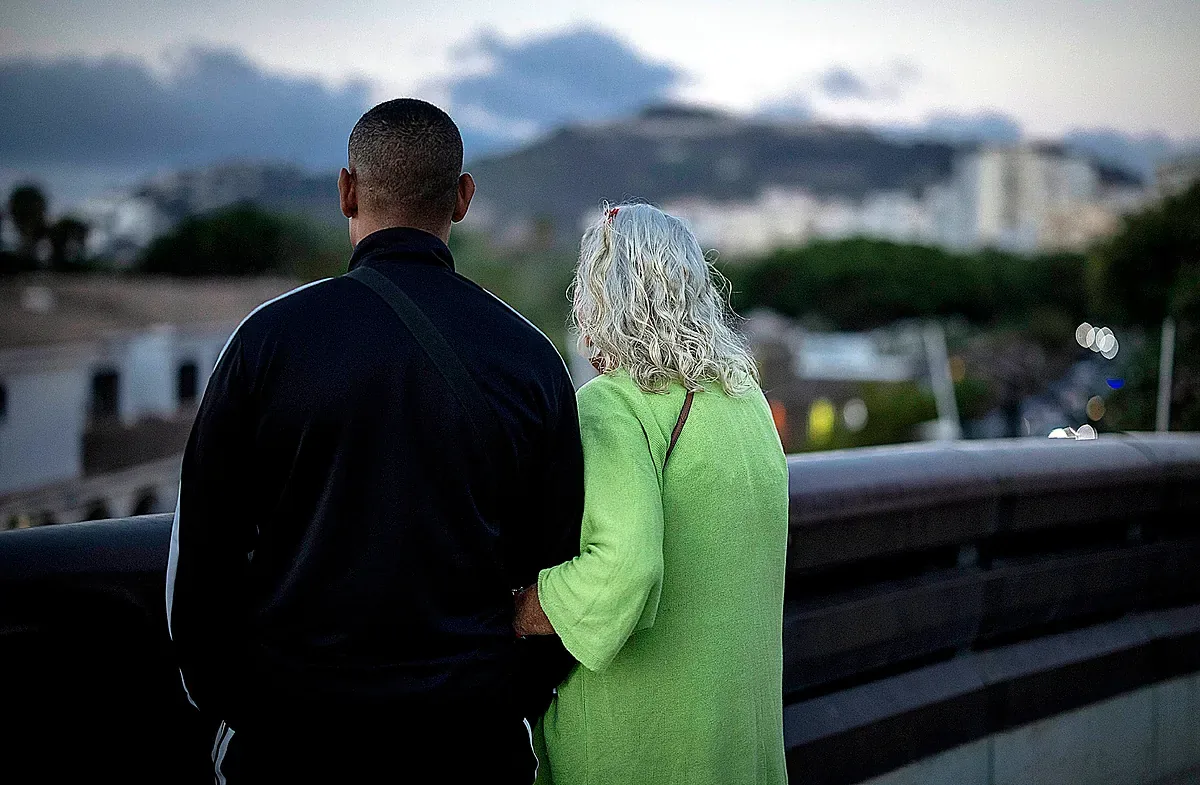
Ceuta has had a hard time these last days. It has been 24 hours, say its neighbors, of anguish and uncertainty, of helplessness before a humanitarian drama that literally knocked on their doors and most of their neighbors could do little, except be witnesses.
Ali and Amal, who work at the pharmacy located at the end of Paseo de la Marina Española, were able to do something. They say that the business, like all pharmacies in the city, did not close, only lowered the shutter and served through the window for on-call services. Dozens of immigrants who arrived via Tarajal approached theirs.
“There were mothers with their children, diabetics, injured people asking for bandages and Betadine and most paid for what they took, others we gave it to them,” they recount still impressed by an experience that neither of them, they agree, will be able to forget for a long time.
A relative normality and the return operation, halfway
Ceuta regained its rhythm yesterday and a relative normality when there were still hundreds, thousands, of Maghrebis (and some sub-Saharan) in the city who entered en masse, mostly swimming.
Hidden in parks, in playgrounds, behind balustrades of Paseo de la Marina or more in sight on the ledges of the road leading to the border or in neighborhoods a bit farther from the center. Like the Moroccan Adam, 17 years old, who assured EL MUNDO in a square of Polígono Virgen de África that he does not intend to return, that “I want to work here, in Spain.”
Or like Jean Jacques, from Ivory Coast, who tried to go unnoticed, alone, in Plaza de la Constitución, determined to resist the return operation promoted by the Ministry of the Interior.
Local police patrols, national police, and military combed Ceuta yesterday street by street, square by square, neighborhood by neighborhood, with the aim of “convincing” immigrants to take the way back.
Sometimes, groups of locals helped the security forces. Like a group of young people in their twenties who spent the morning walking Paseo de la Marina shouting and chasing every immigrant they found. “But without violence,” they justified themselves. Or the neighborhood patrols that formed in some areas, like El Polígono or Villa Jovita, to maintain calm during the night. Enrique (not his real name) stayed until three in the morning watching his street with three friends because “the Police are overwhelmed,” he says with the anger that, having overcome the worst of the crisis, spreads throughout Ceuta the day after.