


A large internal explosion had opened the T72 tank as if it were a can of sardines. The turret was 10 meters away. Oleksi Yúkov began to walk around the armored vehicle looking for evidence. He soon found it in the form of torn military clothing. “These are remains of Russian uniforms.” Around, the Ukrainian spring had filled the field with flowers and the air with insects. The work that day in the destroyed village of Dolyna, under a burning sun, was to check if there were human remains and extract them for analysis, because the goal was always to inform families of the final fate of their loved ones and give them a Christian burial. Whether Ukrainian or Russian.
Read more Colombia facing earthquakes: when the risk is also built
That day in 2024, in front of this reporter, Yúkov’s team and his assistants from the Platzdarm Military Historical Heritage Researchers Association excavated inside the armored vehicle until, little by little, they found what they were looking for. As they removed layers of earth, a sharp and nauseating smell began to emerge. “The moisture has preserved these remains. Death can be smelled and felt,” said Yúkov. “The explosion crushed the driver of this tank into the ground and pieces of his body fused with the melted steel but, despite the time passed, we have some remains of flesh and facial bones.” He even found the possible origin of the explosion: the ring of a grenade: “It is possible that some Ukrainian soldier introduced a grenade through the tank hatch and surprised its crew.”
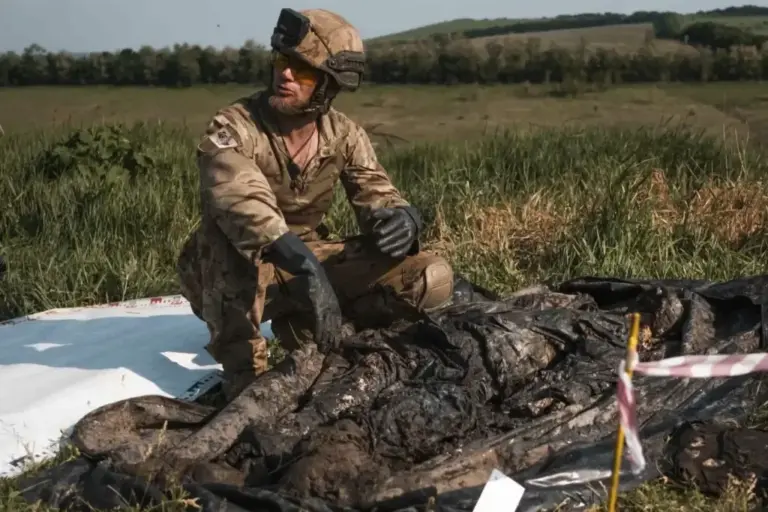
This 40-year-old archaeologist, responsible for recovering and delivering hundreds of dead soldiers’ bodies to their families, whether Russian or Ukrainian, died last week after stepping on a mine in an area near the Donbas battlefront, Yúkov’s usual workplace.
Expert in anatomy
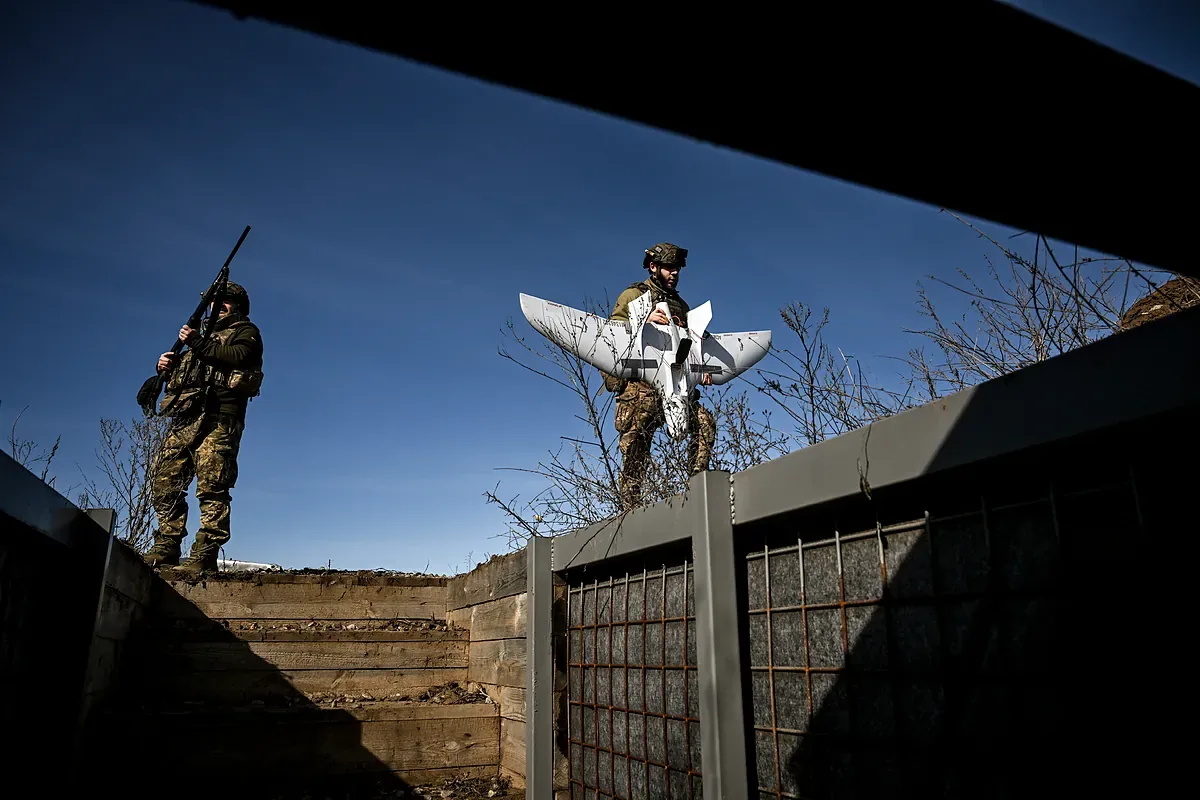
The researcher and expert in human anatomy (he could identify human bones just by seeing a small fragment) was born in Sloviansk, right where the 2014 conflict began between Ukraine and the pro-Russian militias supported by Moscow. Until then, he had specialized in finding and identifying bodies of German and Soviet soldiers fallen during World War II. “Sometimes it is easy to identify the dead. German soldiers had better teeth than Soviets because they ate foods that were chewed better, but they also had more cavities from consuming more sugar,” he told this reporter while extracting a pistol holster and the dead man’s belt buckle. “Remote mines, bombings, drones: everything is against you. But you go and do everything possible so that every soul returns home,” Yúkov said.
Information about the dead Russians was sent to the Russian Ministry of Defense to confirm by DNA that those soldiers belonged to their army. This collaboration has been one of the few bridges that have remained standing between Russian and Ukrainian authorities during the invasion.
Read more The PSOE has lost 23,388 members since Pedro Sánchez came to La Moncloa in 2018
This past Sunday Ukraine held an Orthodox Christian service at St. Volodymyr’s Cathedral in central Kyiv, where thousands gathered to pay their respects to Oleksi Yúkov, a well-known and respected figure in society, known as “the soul collector.”
“Difficult and terrifying”
Hundreds of people also gathered at Kyiv’s Maidan Square and knelt as a sign of respect while his coffin was transported to the site. Commemorative ceremonies were also held in other cities.
Yúkov’s widow, Evgenyia Kaluhyna, promised to continue his work, standing beside her husband’s open coffin. “The work was difficult and terrifying,” she said. “But I promise you we will continue because the (dead) deserve it, and you deserve it for all you have done.” In statements to The Associated Press, Yúkov’s daughter, Diana Kaluhyna, said that “the love and kindness” he showed to grieving families moved the nation. “What remains with me today is a simple truth: he honored the dead and healed the living,” she said. “He offered more than hope, he restored people.”
Yúkov, who was also a martial arts expert, had suffered leg injuries and lost an eye in another mine explosion in 2022, although none of those wounds prevented him from returning to the front to recover more bodies.