






Ossama Zitouni had, so to speak, bad luck. He swam across the border at El Tarajal, between Castillejos and Ceuta, on July 29th. During those days, many others like him did the same. The Spanish police watched from their station on a cliff in Ceuta as every day about a hundred swimmers risked crossing the border.
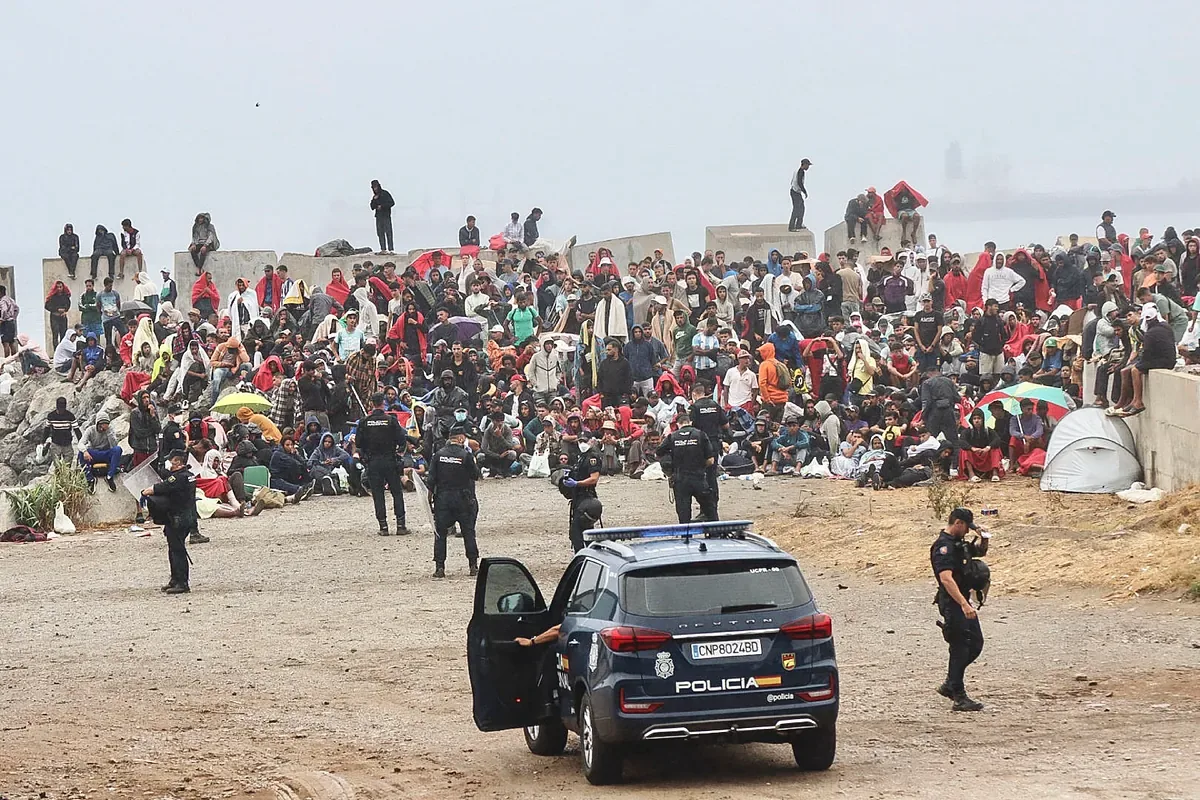
But just a few hours after Ossama, who is 26 years old and a smart guy, swam those four kilometers with barely any clothes, a mobile phone, and a credit card, the trickle turned into a torrent, and then into another sea on top of the sea. And suddenly between 70,000 and 80,000 people crossed from Morocco to Spain, almost the same number as live in Ceuta, which began to tear at the seams.
The shock was so great, even for those who had jumped from one country to another, that a large majority chose to retrace their steps and return to Morocco, back to the same poverty they were trying to escape. It seemed clear that Spain was not going to welcome such an influx: Ceuta, logically terrified, slammed the door in their faces.
About 10,000, however, decided to play the long game and stayed. Of them, according to Police figures, about 8,000 remain in the city now, 1,500 of whom are already in the two facilities set up by the Government, with a slowness that astonishes much of the State apparatus.
Thus, in the streets of Ceuta, with absolutely no loss of control by the authorities, with Ceutan women and girls locked in their homes for 23 days now, there are today 6,500 Maghrebis without food, without hygiene and probably without a future.
And, of those 6,500, the Police estimate that 2,500 are hidden, the ambushed, those who want to play the longest game, in the forests, in nooks and crannies, wherever. To be the last of the last, and take the prize.
That’s where Ossama is, who worked as a chef “in the Casablanca Casa José restaurant,” and whose income, barely 350 euros a month, supported his whole family: “My mother, my father, and my two sisters, one 12 years old and the other 20.”
But we were talking about bad luck. “Just after I jumped,” he explains in very good English that he says he learned “watching TV,” “everyone jumped. And of course, now, with all this mess, there’s no way to get into Spain.” He is already in Spain, we tell him, although given the facts it’s not very clear which country Ceuta belongs to. “Well, the Peninsula,” he replies and, as throughout the conversation, smiles.
So the plan is clear, and it is that of hundreds or perhaps a thousand Maghrebis spread across the terrain of Ceuta. “What I want to do is hold on as long as I can until all this passes, maybe get some work here in Ceuta,” and then “apply for asylum and try.”
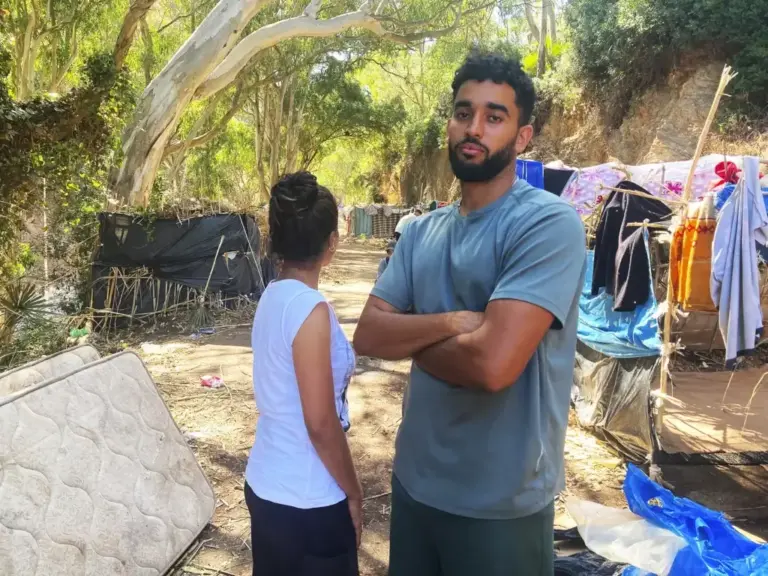
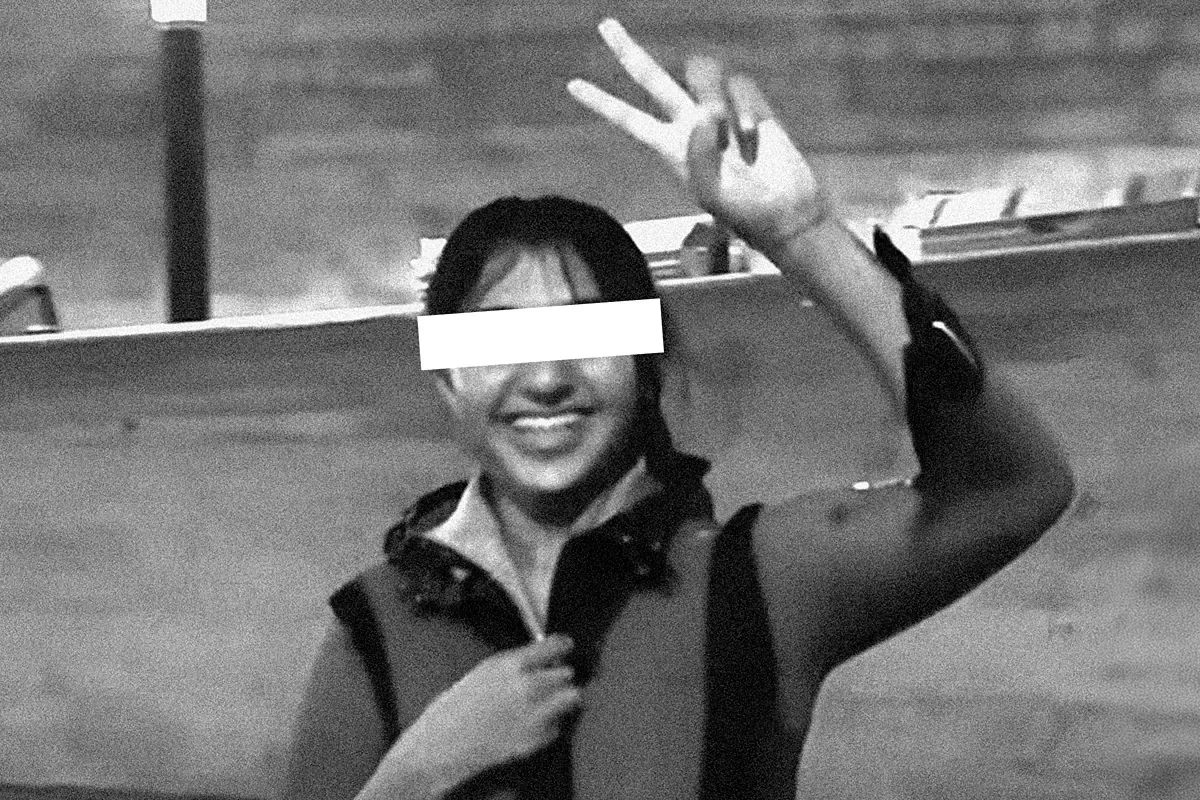
Both he and Doha, a 26-year-old girl from Casablanca in the same situation, believe that almost all the Maghrebis who now enter the Government centers “will be returned to Morocco.” The idea is to hold on until the storm passes. For Ossama, for reality to return to July 29th, when Ceuta had not yet become what it is today: a city on the brink of a humanitarian and public health crisis, where the State is in clear retreat.
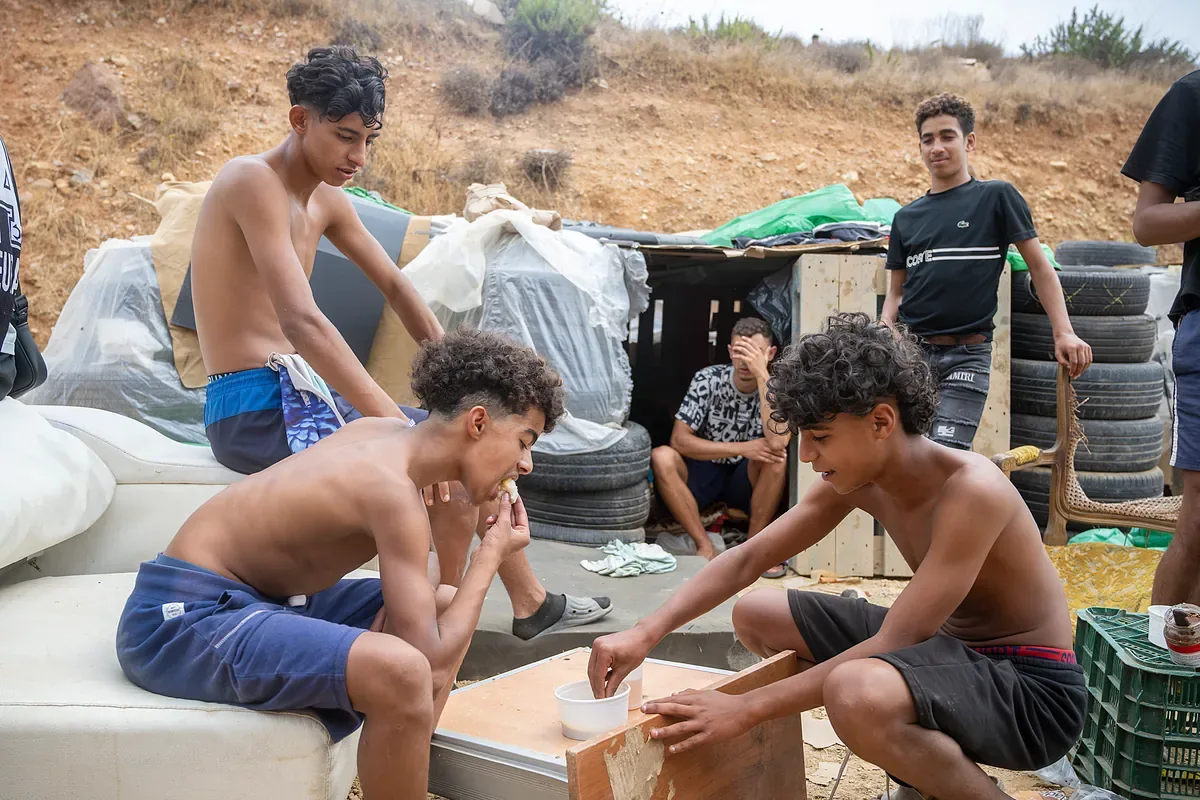
EL MUNDO locates Ossama and Doha in the hills around the Temporary Stay Center for Immigrants, the Ceti they don’t want to set foot in because they consider it would be the first step back to Morocco. Ossama, Doha, and all the others are a kind of maquis of this humanitarian drama, like the fighters of the Civil War who followed the conflict from the forests during Francoism, but in a migratory key.
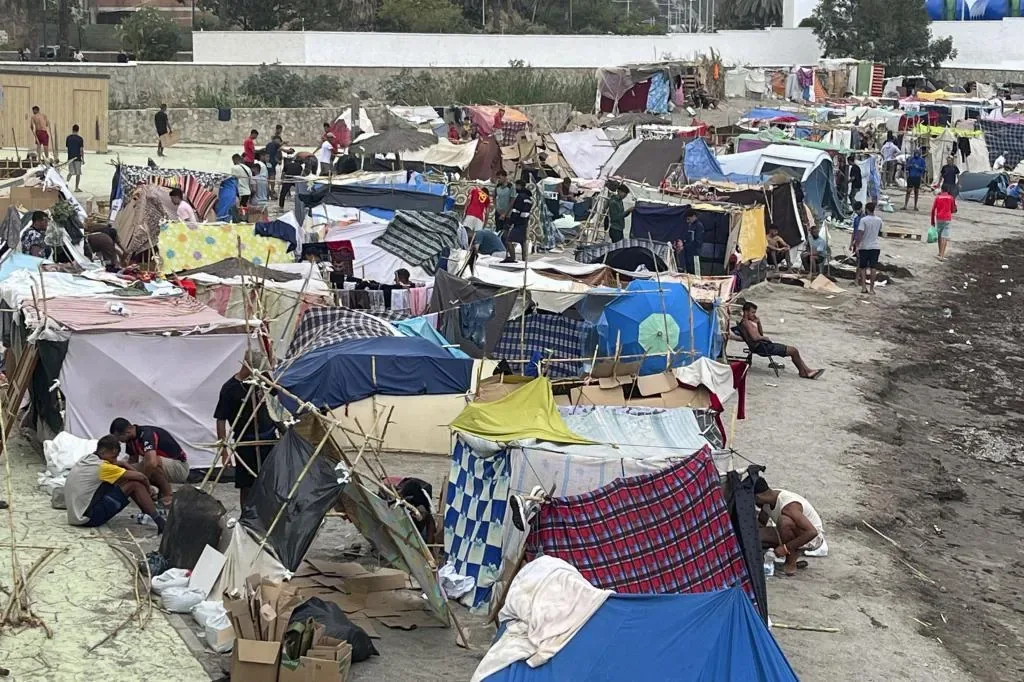
Their life here, logically, is even harder than that of the migrants on Trampolín beach, 500 of whom were evicted by the Police yesterday morning and quickly, as soon as the agents left, reoccupied the beach.
According to police sources consulted by EL MUNDO, about 2,000 migrants remain in the area, with absolute lack of control by the authorities.
Food is brought to those at Trampolín by Red Cross. The maquis have to come down from the mountain to fend for themselves, but Ossama had it all planned: “I have money in my account, I was waiting for the opportunity,” he says. “I saved quite a bit for a while, and I can hold on for months.”
Ossama and Doha are victims, they explain, of the economic crisis and lack of democracy in the Moroccan autocracy: “It’s crazy,” he says, “money there is like pouring water on sand, prices have risen enormously in recent years, and wages nothing. A bottle of water is cheaper in Spain than in Morocco. I worked in the restaurant and also made deliveries on my motorcycle, but I had no money for anything.”
He clarifies: “In Morocco you can only eat, but don’t think about doing anything more. I dream of opening a restaurant.” Doha, sitting next to one of the huts made of reeds and straw they live in in the middle of nowhere – like Tintin in the Congo – says she studied Commerce, that her mother died and life with her father was “difficult.” She speaks French, a little English, and has insisted on learning “a little Spanish, because I like it a lot,” she says.
In the middle of the conversation another boy appears who only speaks Arabic. They translate his story for us: “He has no papers not even in Morocco. His father had problems with alcohol, with his mother… He doesn’t even have Moroccan ID. What can he do?” they ask, with an innocent tone.
Both start explaining the absence of democracy in Morocco, but they are not able to put clear words to it: “Here we shout ‘asylum’ and the Spanish Police help you, they don’t beat you. There they beat you at the first chance. The teachers protested and they beat them.”
Do they know what they would need for Spanish law to grant them asylum? No idea. We explain that they would have to justify some kind of persecution. Ossama narrates that he had a conflict with a policeman in Casablanca, and had to bribe him, he says, “with 1,000 euros, which for us is a lot, a lot, a lot of money.”
“Do they know in Spain that we are here?” they ask. Of course, and it’s well known. Doha decided to jump on July 31st, a day after the great migratory exodus began. Ossama had been maturing it for some time: “When I read on social media that they said Spain was going to pull everyone out of the water who jumped there, I decided.”
Four days ago the Army combed these hills. “They came and threw everything at us, they insulted me in a racist way, but here we are,” he says. Buying in a store, they saw an altercation and a Ceutan showing a gun he carried in his pants, she says, very impressed.
Around them, the forest, small piles of garbage, and in the background the Strait, from which Gibraltar and the Peninsula were perfectly visible yesterday.
Read more Alert in Ávila: fights and shootings force the southern area to be secured during the night