

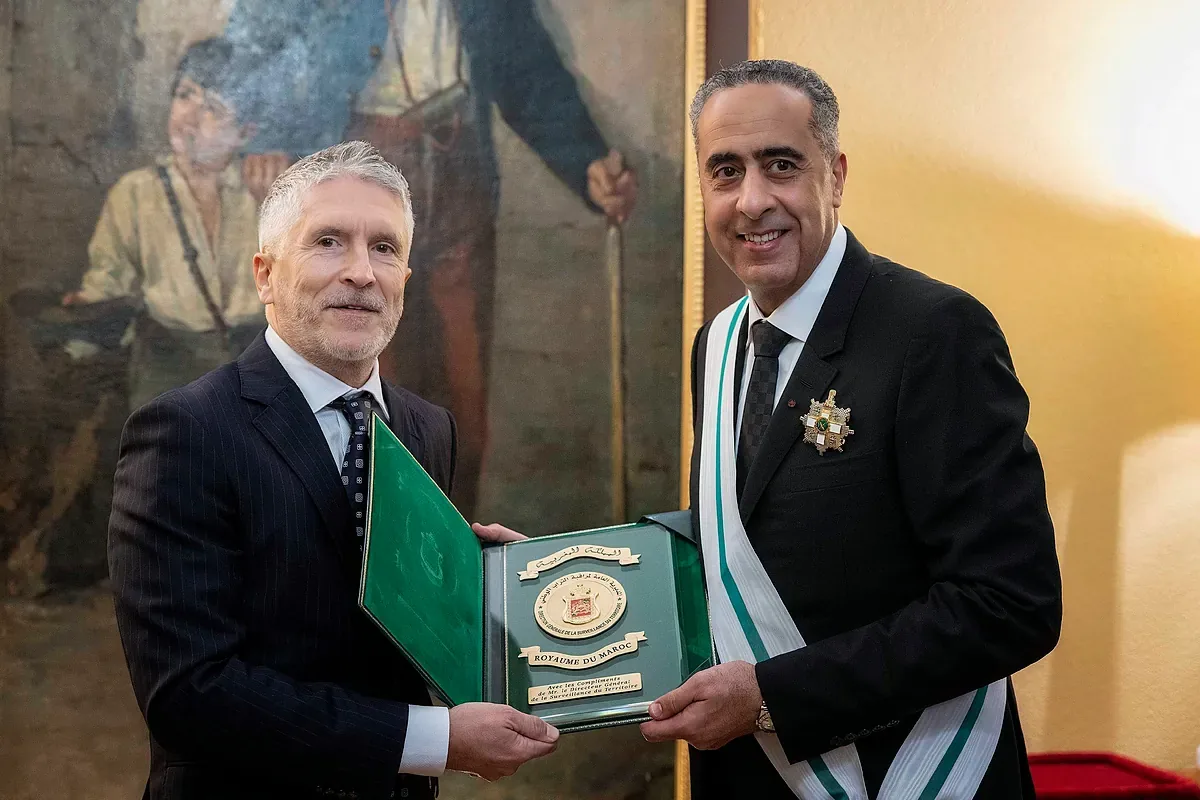
Abdellatif Hammouchi: his name may sound unfamiliar to many, but it is actually easy to find occasional news about him in archives. He is one of the most powerful men in Morocco, a close friend of King Mohammed VI. His position is at the very top of the majzén, the Moroccan power circle that originates from the royal palace. And because of his work, he is the man who could have prevented the assault on Ceuta, but did not.
Hammouchi is a police commissioner and director of the DGST (Direction Générale de la Surveillance du Territoire), the internal intelligence service of Morocco, which has the same name as the counterintelligence agency created by General De Gaulle in France (although it is no longer called that). He lives in a palace in Rabat, is ceremonious, polite, and a former high school classmate of King Mohammed. The king’s trust in him is so great that, if the monarch travels abroad, he does not leave the country to ensure nothing happens.
His importance has a precedent in the times of King Hassan II, who did not trust the military after suffering two failed coups d’état, so he ended up making a policeman, Driss Basri, his right hand. His son followed in his footsteps and also trusted a policeman.
As head of internal intelligence, it is certain that Hammouchi knew perfectly well the movements of thousands of cars and people towards Castillejos at the end of July. Nothing happens in Morocco without his ears knowing it. And in case there were doubts, the CNI included his agency among the recipients of the warning sent to Morocco through the early warning channel on July 29, which the Government declassified this week.
The other branch Hammouchi controls is the Police, of which he is director. This makes him the person who, knowing from the DGST that an assault on Ceuta was expected, could have sent the Police to reinforce the border. Why didn’t he do it? The hackers of Jabaroot suggest it was not just negligence. Instead, he has currently placed police checkpoints 15 kilometers from Castillejos, so now no one can approach Ceuta, unlike what happened at the end of July.
Those who know him speak of a very dark side, “inhuman,” in which his subordinates have to hand over their passports to him and ask him if they want to travel abroad, always explaining where they are going. And when something drastic is needed with someone, that someone may have a fatal accident, “usually against a truck.”
His relationship with Spain is ambiguous, of love-hate, like all the neighborhood with Morocco: with the National Police he has an excellent relationship, as confirmed by a former senior official of the General Commissariat of Information, now retired: “I can only speak well of him. His treatment of us was always exquisite and the collaboration we had, only on the antiterrorism level, very good. We exchanged information about jihadists,” he recalls.
However, with the Civil Guard the relationship has been very bad for years. Other members of the state security who have dealt with him remember the famous yacht incident: in 2014, the Civil Guard inspected a recreational boat in Ceuta waters and it turned out that none other than Mohammed VI himself was on board, who said to the agents: “Don’t you know who I am?”
That unleashed a storm with Morocco. Five days later, the largest raft influx to Andalusia to date occurred. And also, by the way, a jump over the Ceuta fence, which then seemed large, but was actually only about 80 people.
The yacht incident outraged Hammouchi with the Civil Guard, and that has weighed on Morocco’s collaboration with them in matters of drug trafficking or immigration, which is little to none.
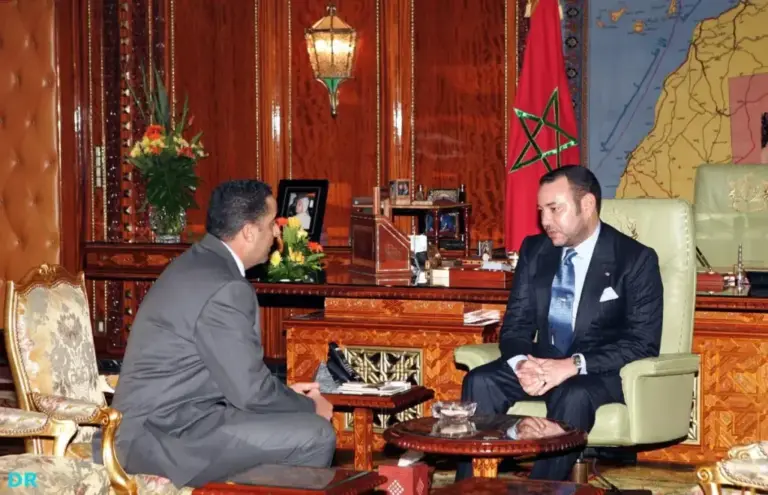
However, Hammouchi’s role against jihadism is fundamental: the vast majority of the nearly 1,100 jihadists arrested in Spain so far are Moroccan, and the shared information has been essential for the General Commissariat of Information to arrest them over the years.
Additionally, Morocco has the Gendarmerie as a police-military body, something equivalent to the Civil Guard, so Hammouchi’s natural sympathy is greater towards the National Police.
The proof of Morocco’s essential role as an ally in this fight is in France. Paris received similar collaboration to Spain in antiterrorism matters, until in 2014 the French Judicial Police tried to arrest Hammouchi to bring him before a French judge investigating him for torture. That led to the suspension of all collaboration with France.
As a consequence, between 2014 and 2015 the French suffered the worst jihadist attacks in their history: the run-overs at the Christmas market in Nantes, the murders at the Jewish supermarket in Paris, the Charlie Hebdo massacre, the Bataclan massacre…
Medals against problems
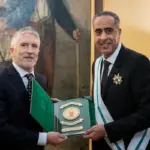
The Minister of the Interior, Fernando Grande-Marlaska, awarded Hammouchi last year the Grand Cross of the Order of Merit of the Civil Guard, for his collaboration in antiterrorism and security matters, as seen in the main photo of this report. That it was the Grand Cross of the Benemérita also has something symbolic for trying to fix that historic problem with the Armed Institute. France, curiously, also gave him a decoration a year after trying to arrest him.
Read more The police transfer hundreds of migrants from Ceuta to a newly equipped facility