









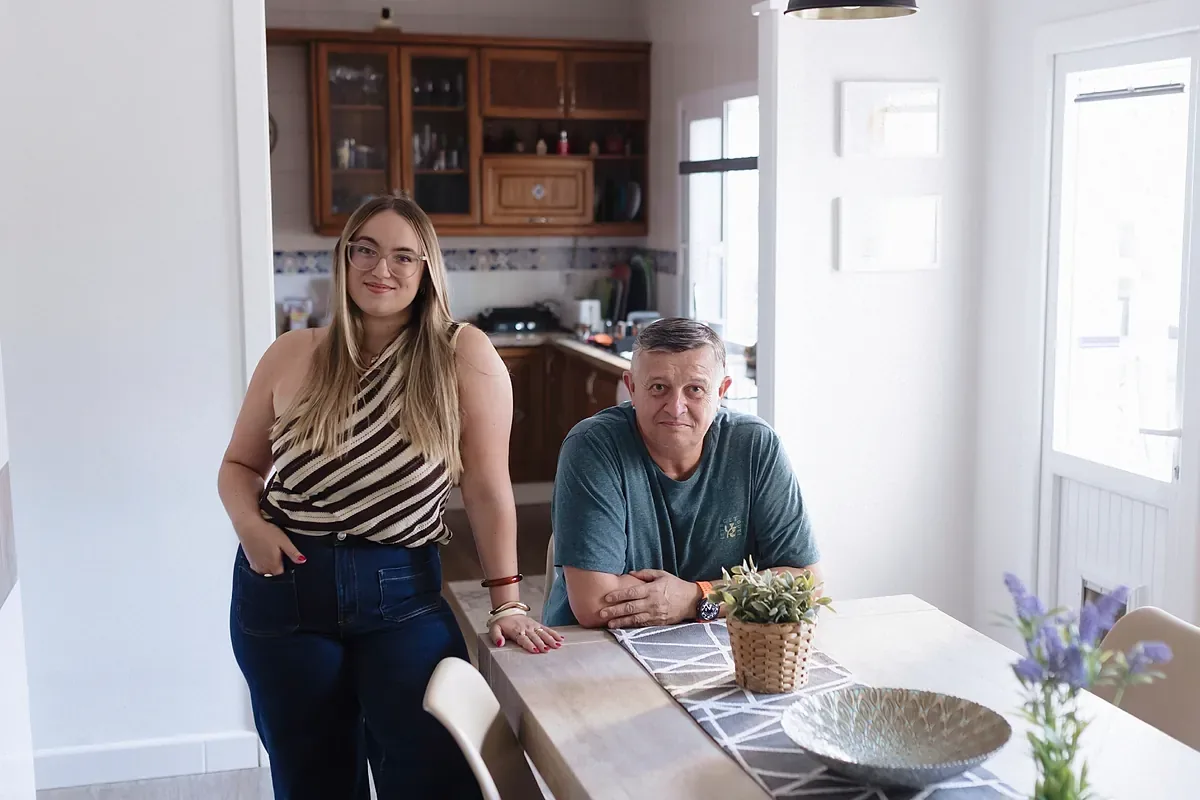
María Antúnez is about to turn 26 years old, but she is still far from achieving a vital goal: becoming independent. She continues living with her parents, despite linking contracts as a nurse since finishing university. She now considers herself “lucky” because she has two jobs: she works in both public and private healthcare. Depending on night shifts, for the past few months she has had an income of 3,000 euros that has helped her start saving (after deducting gasoline and car expenses, which she uses daily to go to work, and contributing to the family economy). “I have to be patient and at least consider living with my parents three more years, if things continue like this,” she explains. “‘Like this’ means: two jobs, and a strict monthly saving system.
There is bad news for European youth: the age of emancipation was delayed again in 2025. The latest Eurostat data published this Tuesday show that in 2025, young people in the European Union (EU) left the family home at an average age of 26.3 years, a slight increase compared to 26.2 years in 2024. But the news is worse for Spanish youth, whom the European statistical office highlights in its list: the highest average ages for leaving the nest are recorded in Greece and Slovakia (both 30.9), Croatia (31.5 years), Spain and Italy (both with an average of 30.2 years). All at a significant distance from the earliest ages within the EU, with Finland (21.4 years) and Denmark (21.8) leading.
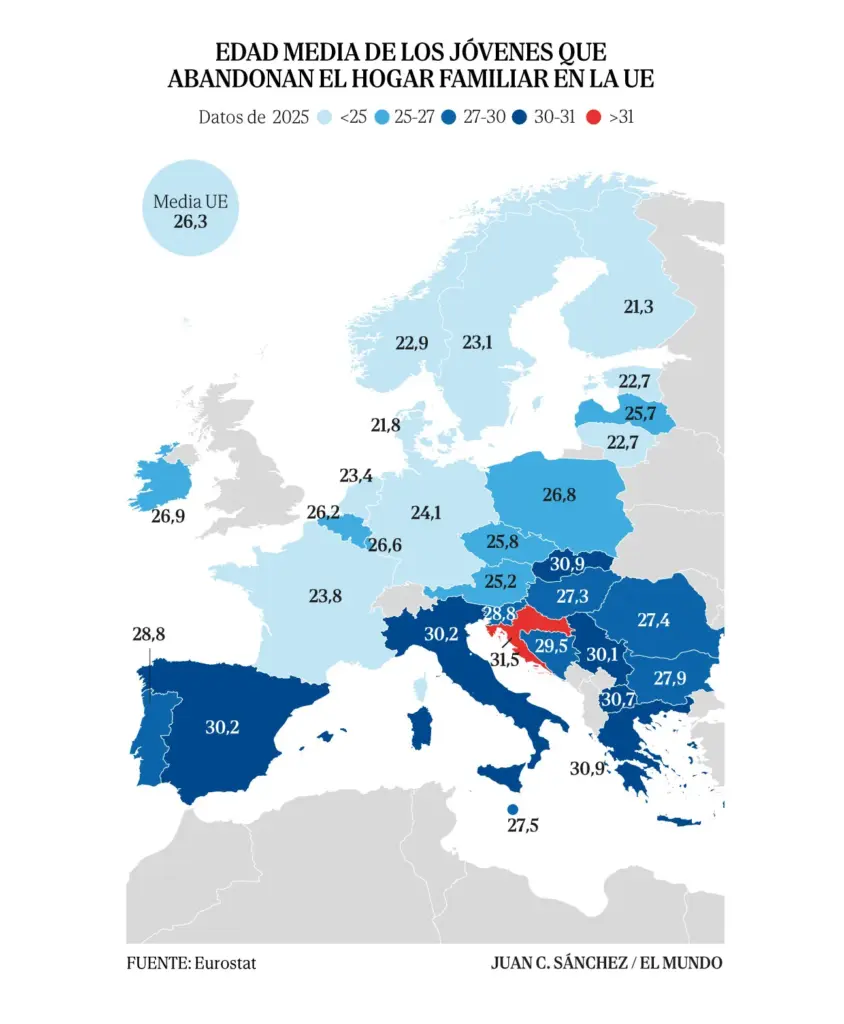
It is not a big difference, but it does reflect a situation that structurally does not progress, and even worsens, since the average age has remained around 26 years since 2002. In Spain’s case, the age is delayed twice as much as the European average (in 2024 it was 30 years). Behind this are recurring factors: high housing prices and job insecurity. And compared to other European countries, Spain does not score well, but is practically at the bottom in various indicators.
“I considered renting, but money invested in rent is not saved, and now mortgages are at the same level as rent,” details Antúnez, who lives in Málaga, a city where rent exceeds an average price of 16.5 euros per square meter (+2.8% compared to 2025), compared to 13.5 euros in the Andalusian capital, Seville (+4.4% year-on-year), according to Idealista. So she opts for buying and selling. Which is not an easy task either: “I am registered on the portal to get a Protected Housing (VPO). And I am still waiting, like all my friends, but almost all the offers I see are for rent. And for buying and selling, it is very complicated for me to get one.” She explains better: her income level, as a family unit (she is single) until this year has not reached the required minimum, which she has verified to be more than 23,000 euros annually. “It is not normal for a VPO, if I had that income level I wouldn’t be looking for one,” she reflects.

Buying a home is “practically impossible” without family help. This is the feeling of the majority (75.3%) of Spanish youth; while renting is not much better. Besides negatively affecting the emotional well-being of young tenants, eight out of ten identify it as “an impossible saving trap”; since the monthly rent is so high that it makes it difficult to gather the necessary down payment to access home ownership, according to the EAE Real Estate Effort Index, prepared by EAE Business School. All this leaves young Spaniards in a complicated situation to manage their future. In fact, the index reveals that more than 65% of young people have postponed decisions, such as becoming independent or starting a family, due to housing costs. One of them is Amanda Cecchini, with a stable partner and plans to leave the family home together in the future… which seems increasingly distant. “At 26 years old I am still in my childhood room, with dolls on the shelf”, she laments. “With the current situation, setting goals like having a wedding or a child is unfeasible.”
Before thinking about fulfilling life projects, Cecchini and her partner (and the rest of Spanish youth) face another factor: job insecurity. Despite being happy with her stable job at a communication agency, her salary as a junior profile does not exceed the minimum. “There is a limbo between 25 and 30, where you are not old enough to be considered a senior profile, but not young enough to still have a student life,” she acknowledges and insists it is a structural problem. And a stable job no longer guarantees renting alone, nor even shared. Although the median youth salary grew by 1.7% in the second half of 2025 compared to the same period last year—up to almost 14,300 euros annually—a young person would have to allocate 98.7% of their salary to rent an apartment alone, while doing so with others would take 33.6%, above the threshold recommended by experts. These data come from the latest report by the Youth Council of Spain (CJE).
At the same time, job insecurity also comes with shorter contract durations. Although nowadays young people are more likely to sign a permanent contract than a few years ago, employment relationships last less time. In fact, Cecchini’s boyfriend was recently fired and “it wasn’t even related to him, but because his company was bought by another and his position was eliminated,” she says. Under these conditions and with only one salary, their plans to buy a house are increasingly distant due to mortgage conditions. Also, saving—precisely because of rent prices—is not an option in the current real estate market. “The aid that existed 20 years ago has remained, but the cost of living is infinitely higher,” she points out.
Read more Elche — R. Madrid live
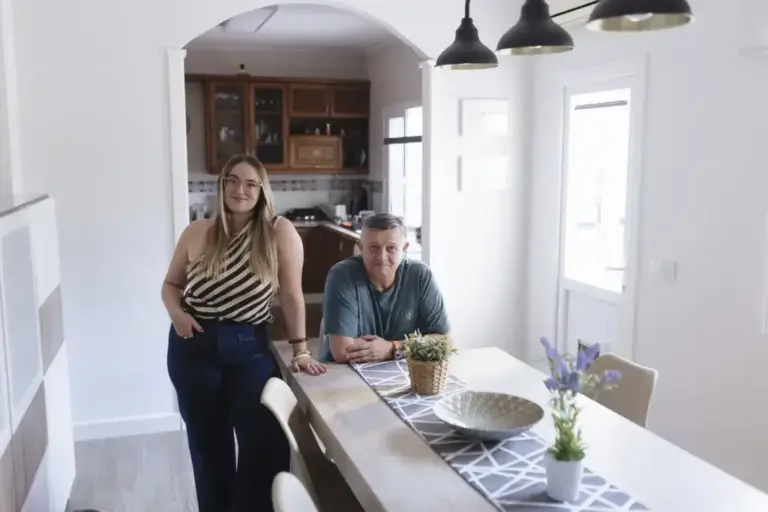
“In countries where young people leave the family home later, such as Greece, Croatia, Spain, and Italy, the employment rate was below the EU average ,” highlights Eurostat based on data from the European Union Labour Force Survey (EU-LFS) in groups from 15 to 34 years old. According to the statistical office, the rate stands at 65.5% for the European average, but falls to 58.2% in the case of the Iberian country. Indeed, it is not a new situation, but one that has not seen substantial improvements. “Each new report causes a few statements, the announcement of another strategy, and a new exchange of reproaches between administrations. Afterwards, young people continue living with their parents until 30.2 years old,” denounces Elsa Arnaiz, president of the platform Talent for the Future.
Emancipation is a factor that depends on housing, employment, taxation, transport, and public services policies in general. Being competencies shared between the central government and autonomous communities, “collaboration between both levels is practically nonexistent”, assures Arnaiz. “We have been accumulating political strategies for years where we need a country strategy. While the government and autonomous communities compete to claim announcements and distribute responsibilities, an entire generation continues to pay the price for their lack of coordination,” she points out.
Shared Renting
The Youth Council of Spain (CJE) explains that a young person who shares a flat allocated 33.6% of their income to housing in 2025. Even in these terms, the recommendation of European institutions not to exceed 30% of housing expenses is surpassed again.
The outlook for the future is not hopeful: the average rent per room in Spain has risen 4.67% compared to last year. From 475.98 euros monthly in 2025, in 2026 it stands at 498.20 euros, according to the Annual Shared Flat Report in Spain – 2026 by pisos.com. In ten years, the monthly rent is 77.83% more expensive, according to the same data.
The platform highlights that the situation is not only for young people, although they are the largest age group: from 18 to 25 years old they represent 50.78% of residents, while young people between 26 and 35 years old account for 29.38%. But, on the other hand, “tenants between 36 and 45 years old represent 10.97% of demand and those between 46 and 60 years old 6.58%. Finally, those over 60 are the smallest group: 2.29%,” concludes the report.
“It is no longer always shared because you want to; more and more it is shared because there is no other reasonable alternative,” concludes Ferran Font, director of Studies at pisos.com.
Read more Renfe removes Óscar Puente’s «trains of the future» from Madrid’s Cercanías due to faults