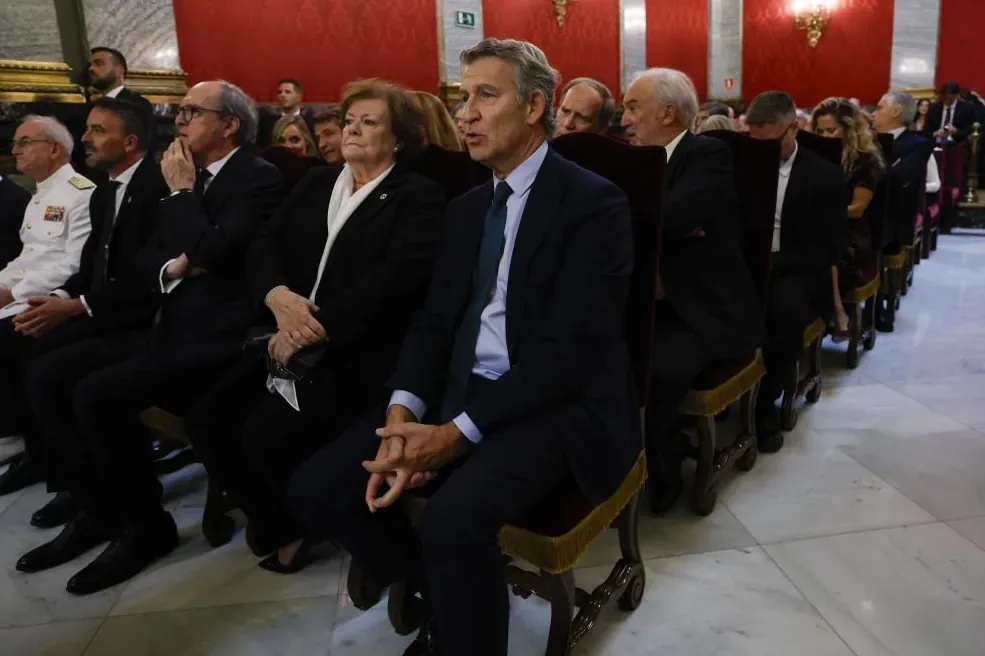





In the Government offices located in the Congress, more than one person covered their face with their hands while shaking their head. Everyone at La Moncloa was prepared for tense moments, because they are facing a very delicate situation, one of Pedro Sánchez’s worst, due to the management of the migration crisis in Ceuta, with criticism from across the parliamentary spectrum and a significant part of society regarding inaction and lack of firmness with Morocco. But some of the expressions that Alberto Núñez Feijóo and Santiago Abascal directed at the head of the Executive drew attention. “How dare you present such a sentimental speech […] when all of Spain knows you have the empathy of a serial killer?”; “You come to say you didn’t know anything and that we have neither responsibility nor guilt. Resign for incompetence or complicity.”
Read more A third of Ceuta’s inhabitants have thought about leaving since the beginning of the crisis
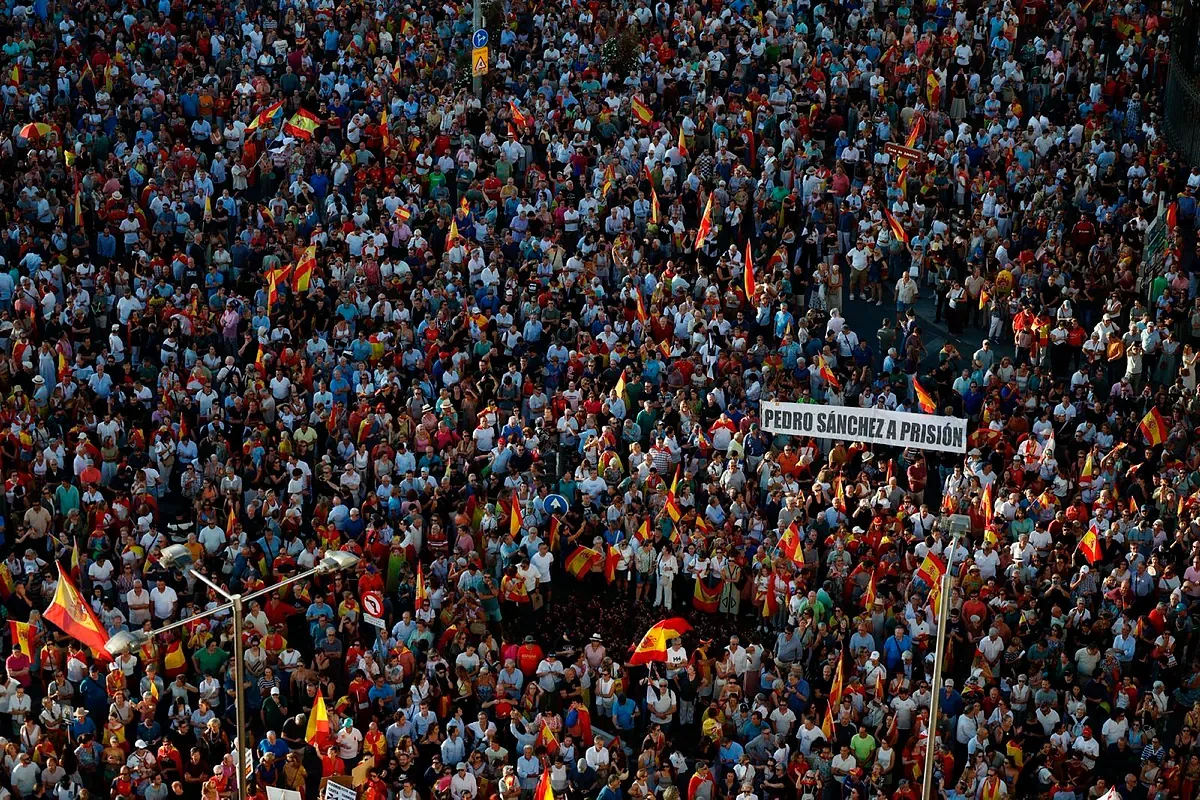
The appearance of the Prime Minister in Congress, besides highlighting his loneliness on this matter, outlined the scenario awaiting the Government in the coming months, until the elections: relentless attack from the opposition and distancing from partners. But in this game, there is an aspect that worries the government offices: social tension, the high voltage among the citizens. The parliamentary session was held just hours after the demonstrations called across the country in support of Ceuta, which were also a window of protest against the Government. Some ended with clashes.
The reflection shared by Government members is that the “violence” seen on the streets is a reflection of the verbal violence that, they believe, is led by PP and Vox. Especially in the context of such a sensitive and controversial issue as immigration and in a context of rejection or criticism of the management carried out by the Government in Ceuta. “If you listen from outside, it is to instill fear,” they say about the words of the opposition members.
“The demonstrations and what happened in them encourage what is said in Congress,” is the ministers’ thesis. Insults to the head of the Executive, as well as threats to journalists, were a constant presence. And they fear that, encouraged by PP and Vox, this social tension will continue and intensify. Given what has happened and that Feijóo and Abascal are stepping on the accelerator, the feeling among the socialists is that the public unrest may increase, grow and prolong under the breeding ground of the statements. In Ceuta, violent episodes have occurred against immigrants and even from them towards members of the Security Forces.
The analysis made in Sánchez’s inner circle is that given the current political landscape and immigration as the central topic of debate, “Vox is going to eat Feijóo. And in that situation, if the far-right eats you, you are forced to raise the tone; but the far-right will also do so. In the end, it creates the feeling that anything goes. And that is dangerous for democracy.” Because everything has a social reflection, in the citizens, on the street.
“Feijóo has only known how to gesture and shout in a crisis in which his partners were asking to ‘hunt migrants’,” say the socialists. “The far-right takes advantage of the tragedy to stir up fear and hatred, characterized by their traitorous patriotism: they always attack Spain when Spain is in trouble,” they say from La Moncloa.
“The PP is like a lighter setting fire to the far-right on this issue,” says a member of the Executive. “The right and the far-right, indistinguishable in this crisis as in so many others, have only known how to stir up hatred in Ceuta and jointly demonstrate in gatherings that have ended in violent acts,” socialist sources state. “They have turned the humanitarian crisis in Ceuta into the perfect stage for confrontation and fear, another opportunity to climb on without thinking about the people of Ceuta or Spaniards, but to profit. That is where the opposition to their country fails again.”
The Government assumes that immigration will be one of the axes of debate in the coming months and elections, because, as those on the front line of managing the Ceuta crisis acknowledge, “the solution will not come overnight,” that is, many weeks still lie ahead. “This will not be quick or easy,” says a member of the Executive. “It requires time”. First, they must concentrate the immigrants still in Ceuta in facilities, register them, and begin the process to return the adults. Slow procedures that are already delayed after weeks of debate and lack of understanding in the locations between the central government and Ceuta. Finally, seven of the eight places are state-owned.
In the Executive, however, it was a relief that after weeks of criticism and constant pressure from Juan Jesús Vivas, president of Ceuta, this week he argued the need to “speed up, according to the law, the procedures for returning immigrants.” That “according to the law” is seen by Moncloa as oxygen amid the political and social urgency to return these people now. According to the data offered by Sánchez, since August 10, the Government would have relocated 3,300 migrants and returned 3,658. In the last week “we have taken 1,530 off the streets, including receptions, returns, and expulsions; and in the next two weeks, we intend to take at least another 1,500 more.”
Read more US attacks three Iranian ships after missile launch against a US aircraft carrier