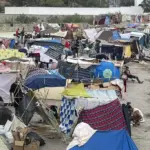







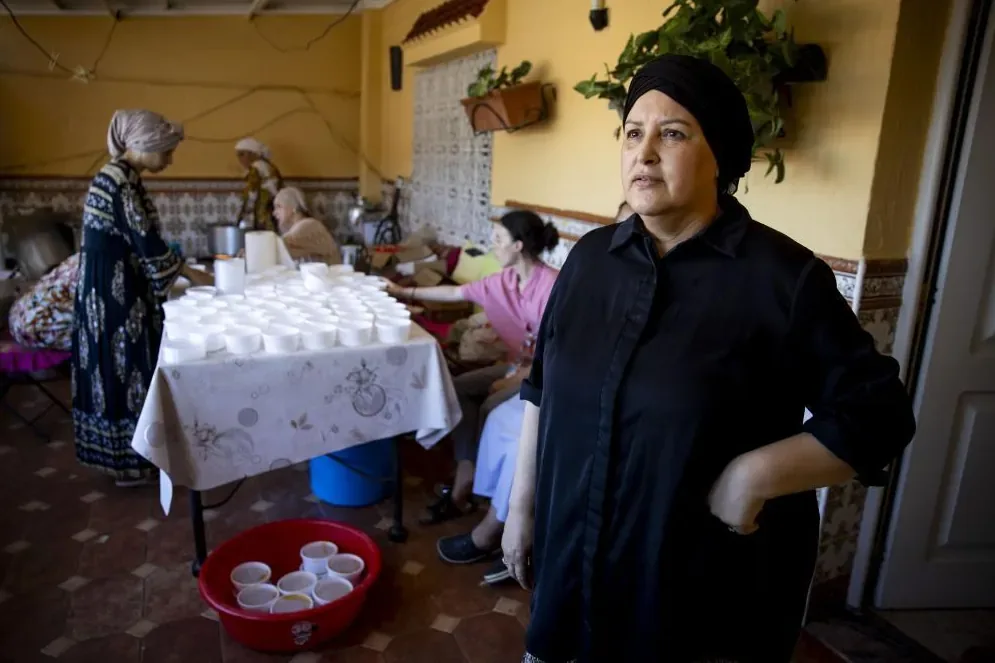
Every morning, at nine o’clock, Sabah opens the door of her house. She does not close it again until around 11 at night. Sometimes, even later. Up to 400 people pass through that door every day. Her home in Los Rosales has become a soup kitchen, clothing warehouse for immigrants, public bathroom, missing persons office, and shelter for minors. A private house is doing part of the work that, almost a week after the massive arrival of migrants in Ceuta, has still not been taken on by the social services of the autonomous city or those of the central government.
Read more Why Chinese intelligence believes that Mosad may be behind the migration crisis in Ceuta
Sabah is a bazaar businesswoman and usually shares the two floors and the terrace of the building with her husband, her son, and a niece. “When all this broke out, they went on vacation and left me here to do my thing,” she says. Now, her rooms serve as a refuge for vulnerable girls and a warehouse for bags of clothes, boxes of food, and large pots. They also receive people who need to eat, wash, dress, or find their loved ones.
She is not alone. A network of Muslim women from Los Rosales, El Príncipe and La Reina cook for hours, sort clothes, gather hygiene products, and look for a safe place for those sleeping on the street. Neighbors contribute food, money, and vehicles. Some families open their homes. “The products are donations from neighbors, local businesspeople, and even children who have emptied their piggy banks,” she says emotionally.
On the terrace, several women stir a minced meat stew inside large pots. Others fill containers that are then distributed on the street. The activity does not stop. “Yesterday we delivered about 200 and some portions,” Sabah estimates. “But then there are the people who were hiding in the fields and who come in the afternoon to shower and eat. About 400 and some people have passed through.”
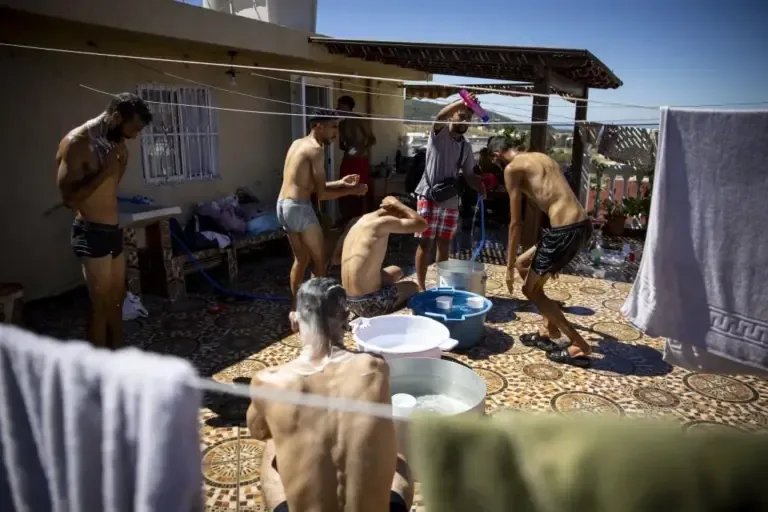
The men and children wash outdoors on the rooftop. They go up in small groups with their clothes inside garbage bags. There are no showers or changing rooms. They clean themselves with buckets, basins, and plastic containers, while volunteers refill the water and distribute soap. Women use the bathrooms on the lower floors to maintain their privacy. Some migrants, after receiving food or clothes, stay to help those who continue waiting.
The beds in the house have disappeared under bags, loaves of bread, cans, clothes, packages of macaroni… What was once a house is now a logistics center. What is the hardest to find? “Underwear,” she answers. “My daughter went to Algeciras to pick up several packages sent by some friends from Gibraltar and I have given away my husband’s and my children’s underwear… You’ll see when they come back,” she says laughing.
Her priority, however, is minors. Especially girls. Four arrived without prior notice last night. The day before, the doorbell woke her: another three came in “with torn clothes and asking for help.” Sabah’s account matches what other neighbors have already told this newspaper: some minors wandering alone through Ceuta have suffered abuse or situations of sexual exploitation.
“I don’t want to have anyone sleeping,” she begins. Then she stops: “But when you see an attempted rape…” The girls sleep wherever they can, inside the rooms of a family they did not know before crossing the border. “Yesterday, they were like sardines in a can,” she states.
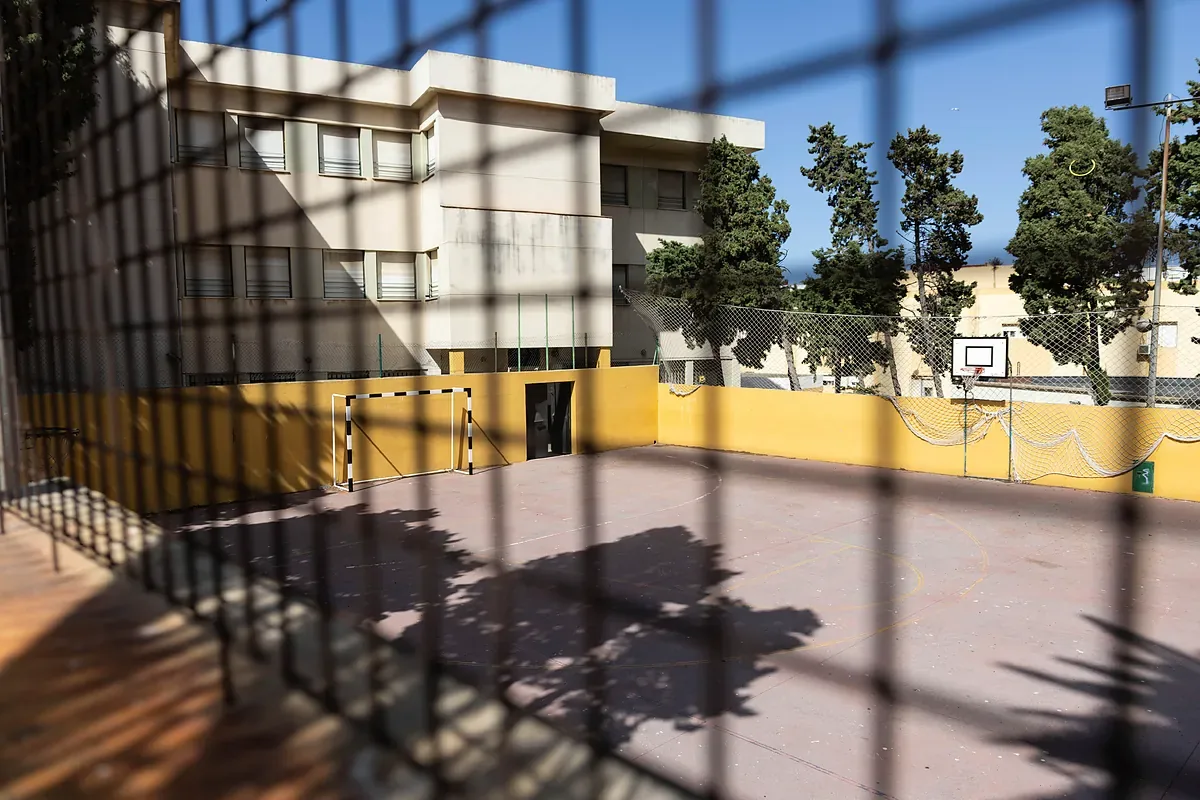
Sexual violence against girls is one of the problems that most worries the inhabitants of these neighborhoods. Usman and his friend Abdalá are two veteran activists from these neighborhoods who have set up a safe zone for women and girls—mostly Maghrebi, but also Sub-Saharan—in a futsal court where, before the humanitarian crisis, neighbors gathered to watch World Cup matches.
There, two 17-year-old girls try to relax by drinking an orange Fanta. They were rescued in extremis the previous night from a group of five men with a menacing appearance. “They were about 40 years old, had prison tattoos, were drinking alcohol, and we saw how they tried to drag the girls into the woods,” they say. The men told them the girls were “their sisters”; then, that they were “their girlfriends.” The activists describe them as “a pack” that “wanted to take them to the woods.”
Fortunately, they managed to move them to a safe place. The young women tried to report what happened to the National Police. However, the minors themselves tell this newspaper that the officers told them “to go to the Tarajal warehouses,” the slum next to the border whose existence this newspaper has already reported.
The protection of minors has become a relentless race for the neighbors of the Muslim neighborhoods. Volunteers try to locate them before men approach them. Then, they make room for them in some home: sometimes, in Sabah’s house; others, in the homes of neighbors like “a blind old woman” whom the activists contacted to take pity on the girls.
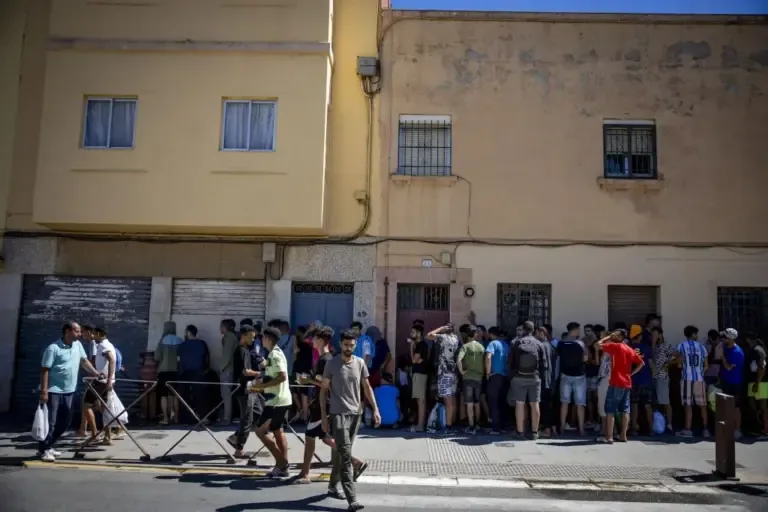
Sabah’s home also functions as a missing persons search point. Neighbors arrive with photographs and circulate messages on WhatsApp about girls supposedly taken to Ceuta whom their parents are looking for on the other side of the border. Taking advantage of the house’s bustle, Sabah asks for the notices to be printed and placed in the house so people can see them. She also promises to spread them through the neighbors’ WhatsApp groups.
Since Sabah’s reputation precedes the latest large migratory wave, some parents even asked their children to go to this woman’s house. That’s how a 14-year-old minor arrived at the house turned logistics center. Sabah took him inside, fed him, and tried to convince him not to go back to the street. “I took him inside, gave him a shower, fed him, and told him: ‘Don’t leave, your mother said you should stay with us’,” she recounts. The boy ended up leaving. Sabah believes his friends made him think the women would call the police. For hours they didn’t know where he was. Finally, the mother reported that he had returned to Morocco and that they had been able to reunite.
The priorities of this improvised network have changed over the days. First, they had to feed those who remained on the streets; then, dress and clean them; now, keep the children safe, because “the street is no place for little eight-year-olds like these,” according to the woman. “The children come first. It’s a matter of vulnerability,” explains Usman.
Muslim neighborhoods
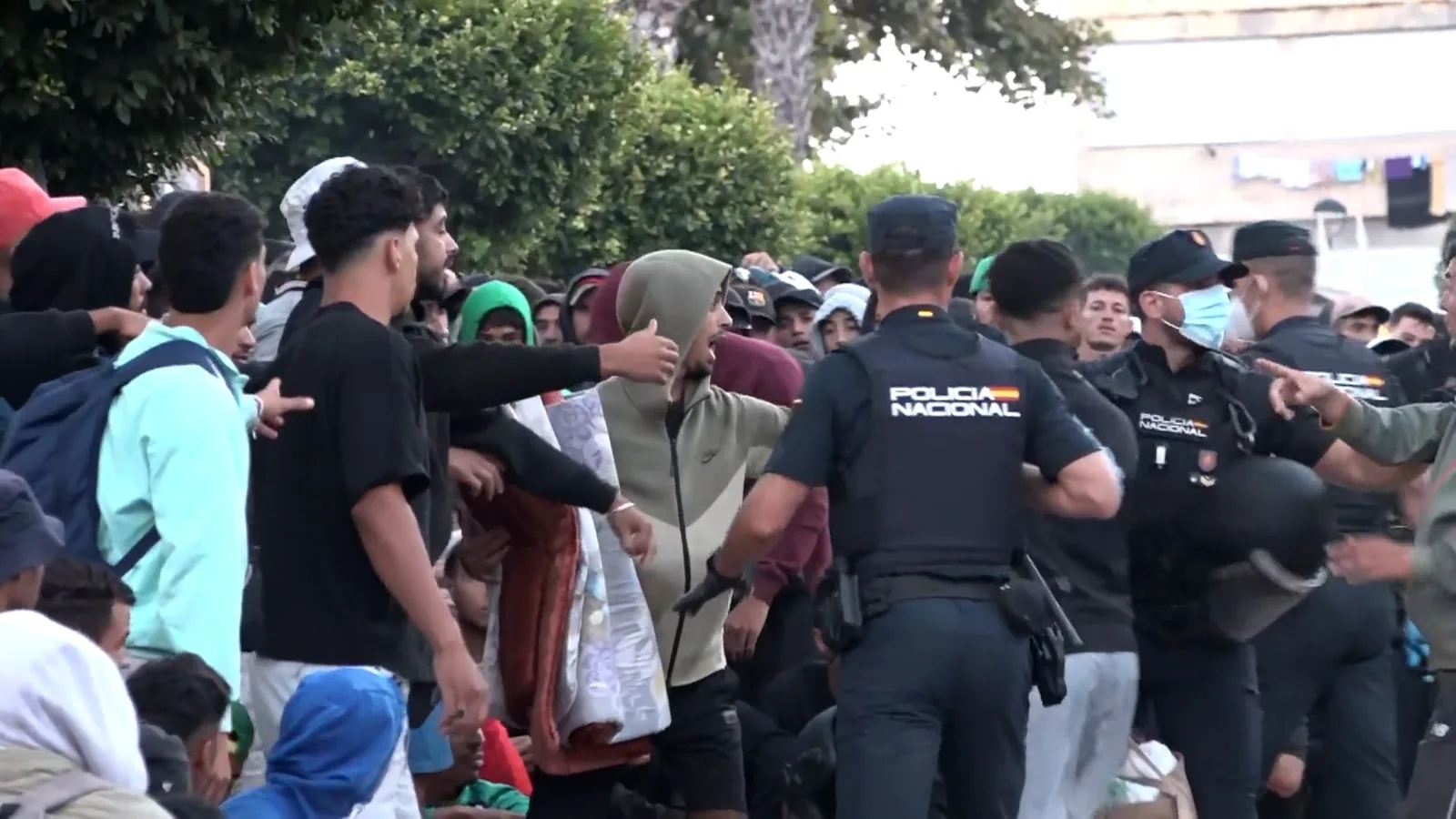
Although now the Muslim neighborhoods are covering the gaps left by the State, the response was not immediate. In the first hours there was fear, rumors, and confrontations. Usman says some neighbors came out with bars and katanas. The perception changed when they saw that many of the newcomers were hungry young people, children, or families who had crossed without knowing what they would find on the other side.
“The neighborhood’s reaction has been solidarity: ‘poor people’,” he says.
But abandonment maintains the tension. Five minutes from Sabah’s house, some migrants have sought refuge in the Muslim cemetery. They rest in the shade, wash clothes, or sleep among the graves. Others have relieved themselves there.
The guard goes to the cemetery to try to get the men to leave “out of respect for the dead” and to avoid a confrontation with the relatives of the buried people. “They can wash and hang clothes. They can stay here a while in the shade, but they cannot sleep or relieve themselves. This is a sacred place,” he says.
Faced with the strong smell of urine and the presence of feces among the graves of their ancestors, some neighbors have threatened to expel them by force. “There have been people we had to calm down. They said: ‘We go down and massacre them.’ They are angry because these are their dead,” recounts the worker, who also says some neighbors want to call the Army to evict the cemetery, although it is “a radical solution” they do not want either. “If the military set up a post here, what will happen is that they will take them all to the border, and we don’t want that either.”
Usman warns that hunger, lack of shelter, and the presence of thousands of people on the streets could trigger confrontations again if public services do not act.
“What do we do, not feed them, as some say?” he asks. “When hunger arrives, people start to jump and they don’t realize this is very serious because blood could be shed here.”
Sabah also sees her work as a way to contain deterioration. Every plate, every shower, every garment, and every minor taken in by her sisterhood network reduce the pressure on streets where solidarity and conflict walk hand in hand.
“We are taking a lot of work off the Government. There are many people helping that are not seen, but the situation holds thanks to the city, which has thrown itself into it,” she says.
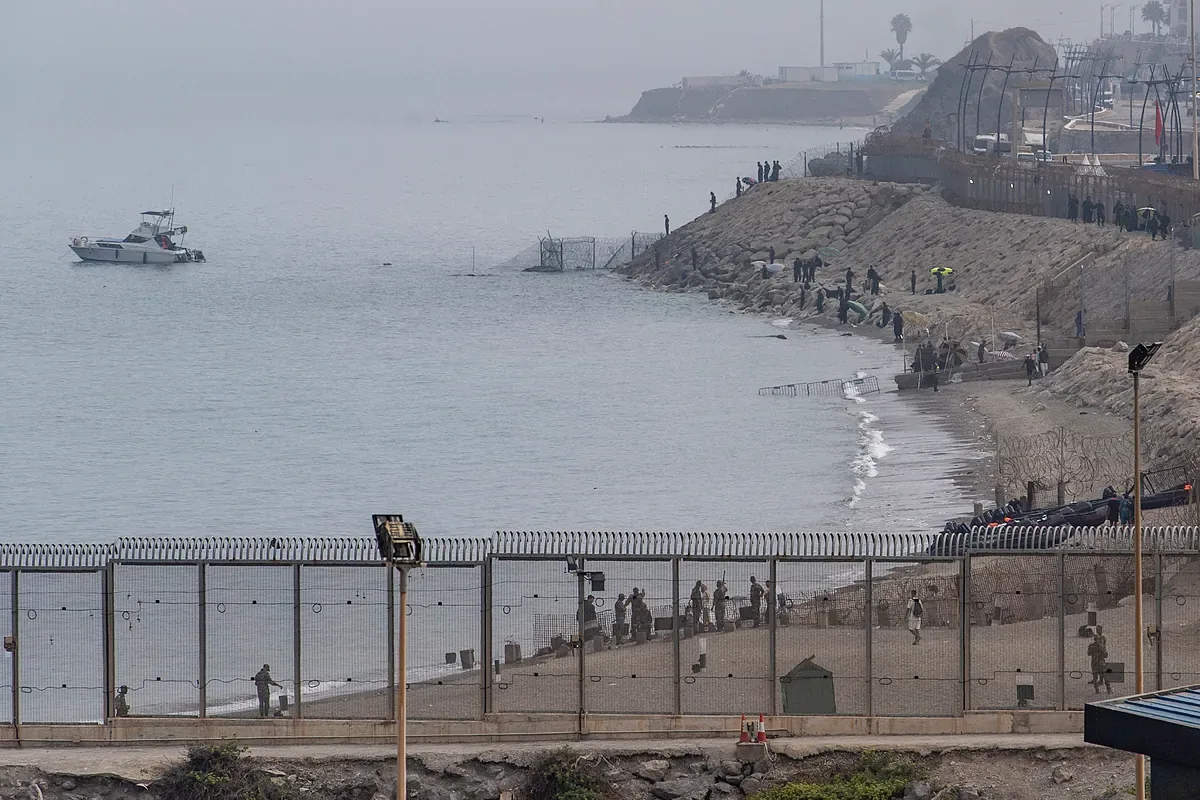
However, it is work that does not belong to them and for which they have hardly any resources. It is where, almost a week after the arrival of 80,000 immigrants, of whom 6,000 continue “wandering” the streets—according to the Government of Ceuta—public administrations still have not arrived.