







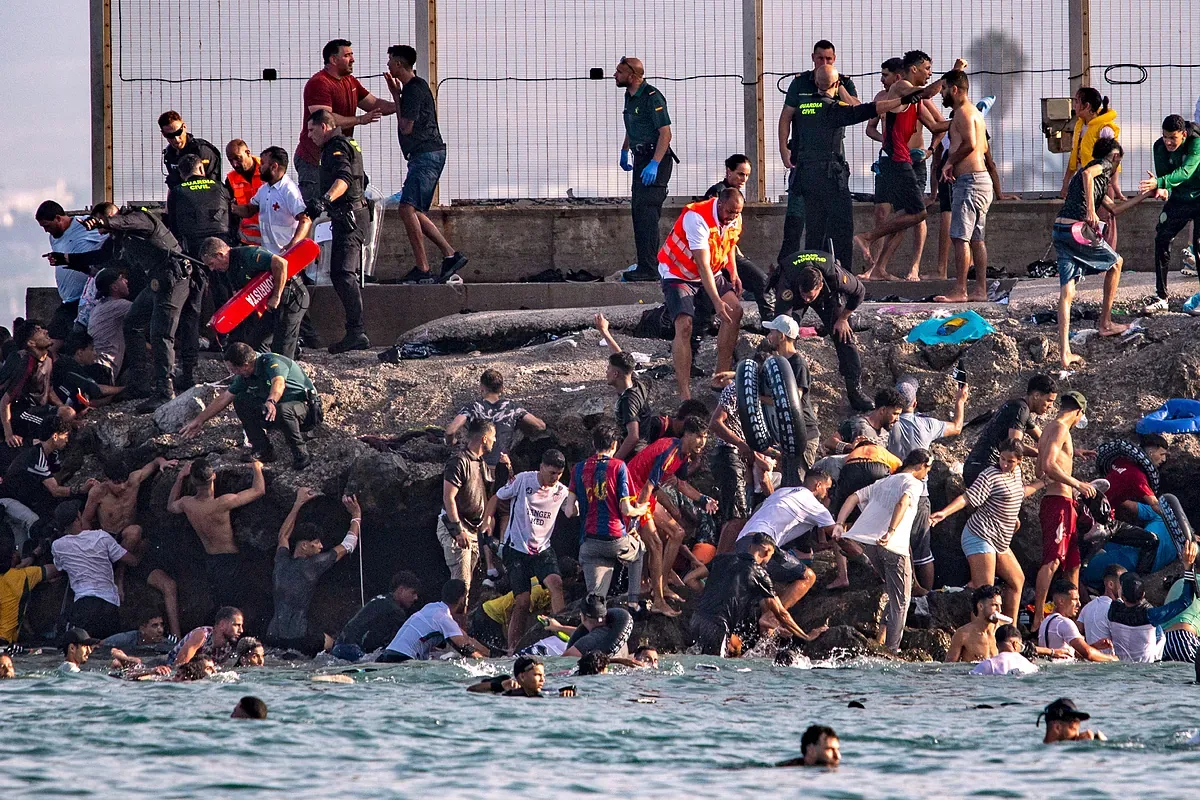
The Executive was unaware of the flood of people who irregularly entered Ceuta on Thursday until it saw them crossing the border. This was stated this Sunday by the Government delegate in the autonomous city, Miguel Ángel Pérez, who, when asked how it was possible that the Spanish intelligence services did not warn of the arrival of a contingent of 60,000 people, maintained: “From my area of competence, which is not much regarding those services, I can assure you that this is the case.”
“We did not have, at least here in this Delegation, any kind of information until we started to see those people entering through the border in that way,” Pérez insisted, who had already said before: “What happens on Thursday morning everyone starts to have information when it happens. Before it happens no one had information.” Along the same lines, yesterday, the Interior Minister, Fernando Grande-Marlaska, already assured that there was “no report regarding a situation like the one that occurred on the 30th [of July] that could have arisen.”
Although the Government delegate, as President Pedro Sánchez also did last Friday, has acknowledged that in recent days an increase in the number of irregular arrivals in Ceuta was being observed, he wanted to draw a distinction between that reality — which he defined as a “very complex migratory situation” — and the avalanche of people who entered on Thursday.
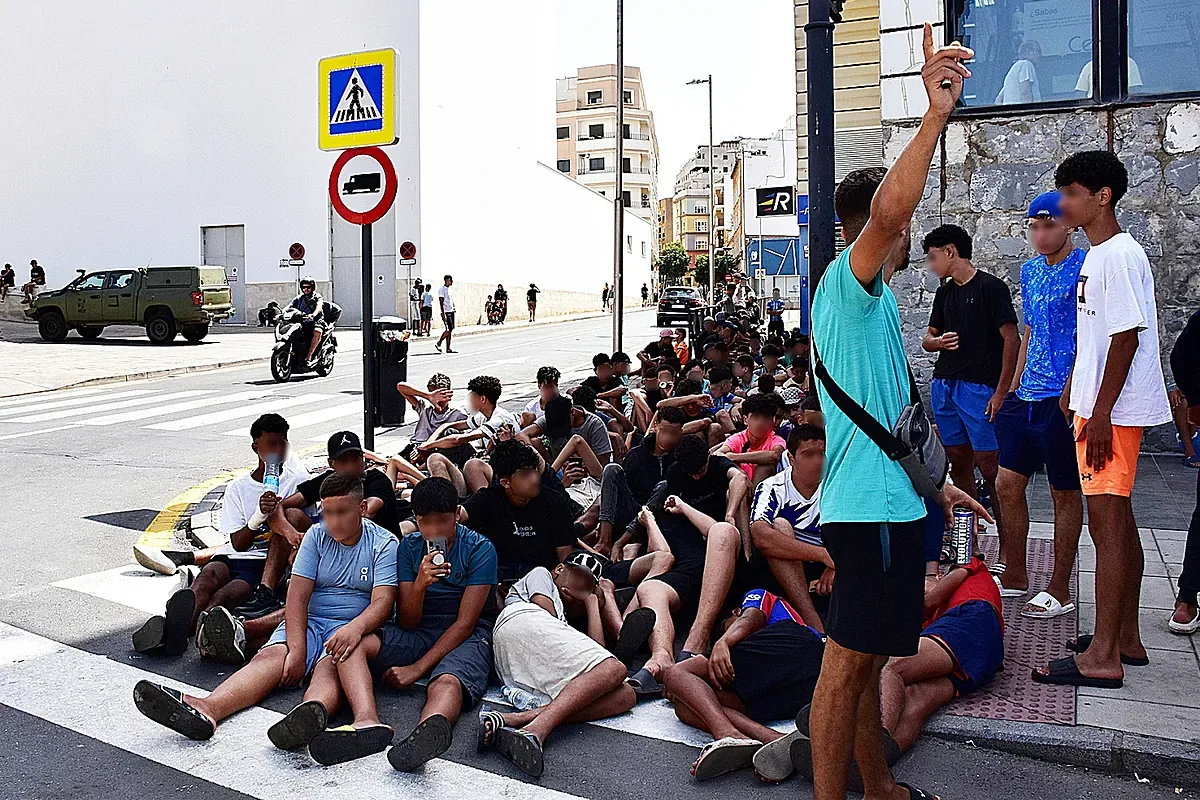
Between Monday and Wednesday, according to his explanation, the autonomous city was experiencing a “migratory crisis” due to a continuous trickle of arrivals. There were “about 1,000 and something” people between those housed in the Temporary Stay Center for Immigrants (CETI) and those waiting outside — the Ceuta president, Juan Jesús Vivas, estimated them at 1,500. Faced with that situation, the Government delegate explained that a special security and reception device was being prepared, an operation that was going to be announced on Thursday itself, which was when the avalanche of entries occurred: “The situation changed radically that same morning.”
“It starts to happen that thousands of people begin to enter on foot through the border,” he described, insisting that “that situation has nothing to do with the previous one” — in the previous days, most accesses were happening by swimming. Pérez pointed out that it was then, upon observing that mass of migrants crossing the border, that the corresponding operation was organized and “the different ministries started working to have the maximum possible resources that same day.”
Read more Sánchez turns his migration policy into a European problem
According to his statement, that device meant increasing the number of State Security Forces and Corps (FCSE) personnel available in Ceuta from the usual 696 agents to 1,042 people. To these must be added the 2,000 Army personnel that the Government ordered to deploy in the city from Thursday afternoon. “They will remain as long as necessary,” said the Government delegate about all of them.
The Government representative in Ceuta did not want to provide new data on the number of irregular immigrants still in the city, arguing that it is a “complicated” calculation that the Executive will only offer when it is “definitive.” The latest count, from Friday afternoon, puts the number of people who irregularly accessed Ceuta on Thursday at 50,000, and those who had returned to Morocco hours later at 48,300. However, Marlaska pointed out yesterday that there could have been up to 60,000 immigrants who entered the city on the day of the avalanche, so thousands could still remain on the streets of Ceuta.
The Government delegate has informed about the number of people who died trying to reach Spain in this border crossing episode: 72 citizens.